
How Founders Can Use LinkedIn to Build Credibility & Attract B2B Clients
1/6/20264 min read
Founders can use LinkedIn to build credibility and attract B2B clients by treating the platform as a strategic revenue engine, not just a place to post updates. Research shows that 76% of B2B buyers use social media to evaluate vendors (Source: Gartner), and LinkedIn remains the #1 channel for B2B lead generation (HubSpot). That means your presence is now part of your go-to-market strategy whether you planned for it or not.
The core answer: Founders who optimize their profile, publish strategic content, engage intentionally, and integrate LinkedIn into their revenue operations build stronger trust, and generate more predictable pipeline.
Within the first few seconds of landing on your profile, buyers form an impression about whether you’re credible enough to solve their problem. This is why LinkedIn isn’t optional anymore, it’s a digital extension of your sales process.
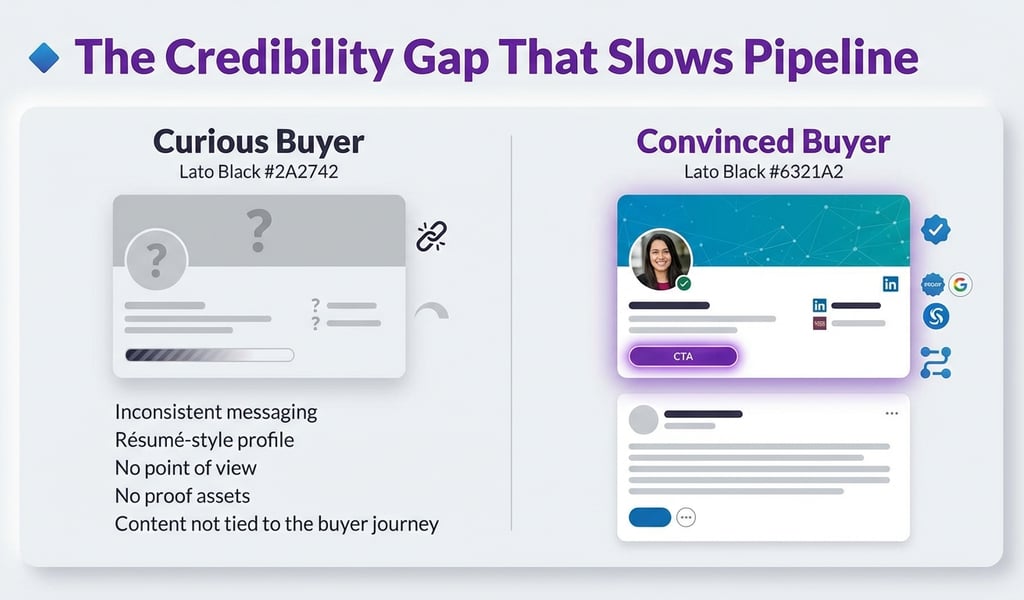
The Problem: Most Founders Have a Credibility Gap They Don’t See
Even high-performing founders unknowingly slow their pipeline because:
Their LinkedIn profile reads like a résumé instead of a value proposition
Their messaging differs across website, LinkedIn, and outbound
They lack a clear, repeatable point of view
Their content doesn’t match the buyer journey
Their posts fail to tie back to demand, pipeline, or revenue
This creates what we call the credibility gap, buyers become curious about you but not convinced.
And in B2B, when credibility is unclear, pipeline becomes unpredictable.
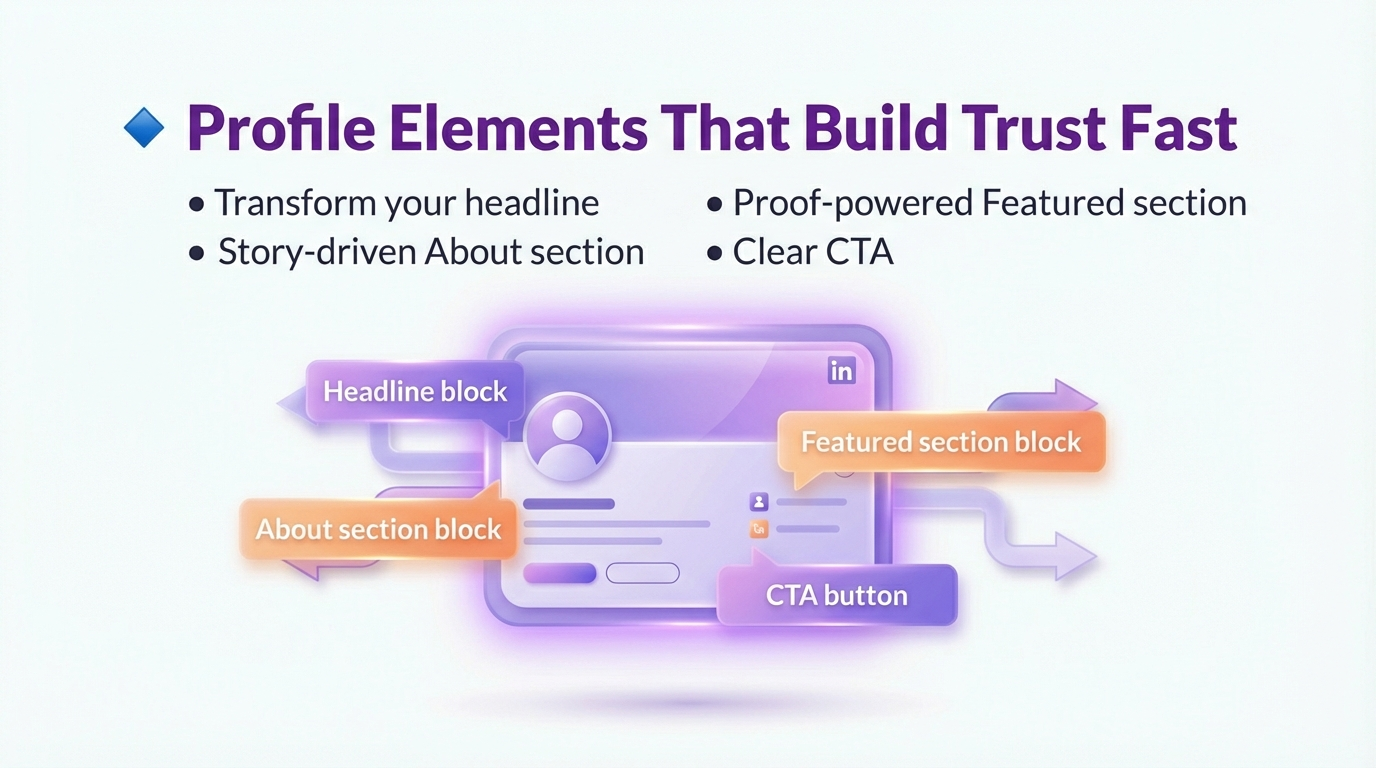
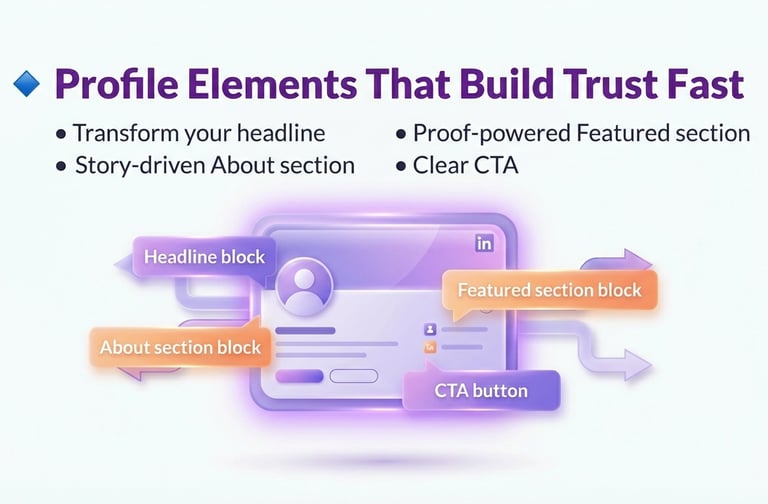
Solution 1: Build a Founder Profile That Sells, Not Just Describes
Your profile is a mini landing page that should answer the question:
“Why should I trust you to solve my problem?”
To make that happen, optimize these areas:
✔️ Headline
Formula: Problem you solve + Who you help + Outcome
Example: Helping B2B founders build predictable pipelines through RevOps.
✔️ About Section
Write directly to your ideal buyer
Tell a short story about the problem you solve
Highlight specific outcomes
Keep it human and benefit-driven
✔️ Featured Section
Show proof, such as:
Case studies
Frameworks
Lead magnets
Client wins
✔️ Clear CTA
Make it frictionless: book a call, download a guide, subscribe.
Forsify data insight:
Across client accounts, a strengthened founder profile increases lead quality and conversion rates, because buyers “pre-qualify” you before they talk to you.
Solution 2: Share Content That Positions You as the Go-To Expert
Founders don’t need to post daily, they need to post strategically. Use these four content pillars:
Authority Content
Frameworks, models, insights, how you think.Credibility Content
Proof, process, client wins, lessons learned.Connection Content
Founder story, leadership thoughts, observations.Demand-Gen Content
Pain points buyers feel and opportunities they’re missing.
Together, these pillars move your audience from:
Awareness → Trust → Action
And according to LinkedIn’s B2B Institute, consistent expert content increases buyer trust by over 40%.
Solution 3: Engage With Intent, Not Randomly
Posting alone doesn’t build pipeline.
Engagement is the other 50% of your LinkedIn strategy:
Comment on your ICP’s posts
Join industry conversations
Engage partners and connectors
Share insights instead of saying “Great post!”
Consistent, strategic interaction boosts visibility and positions you as a credible voice in your category.
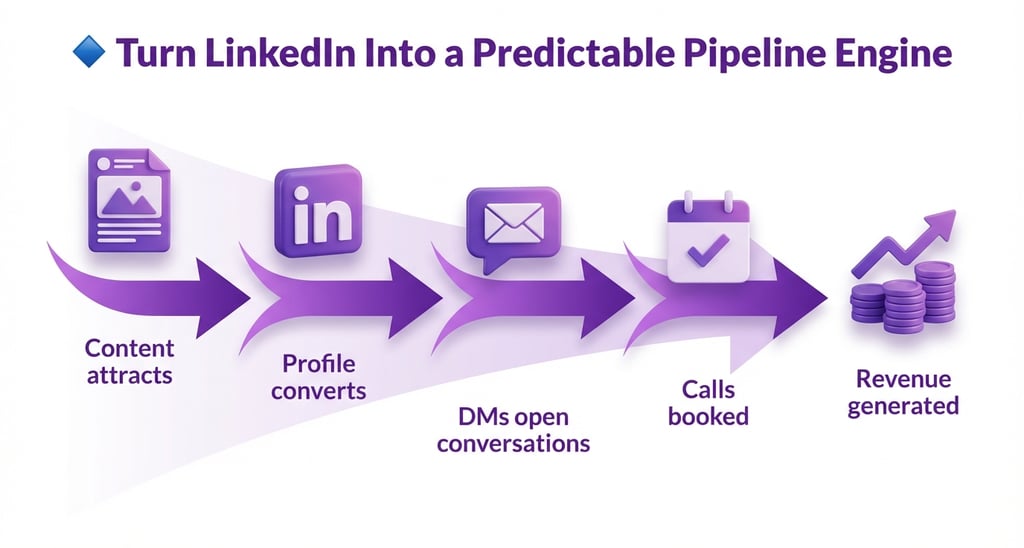
Solution 4: Treat LinkedIn as a Top-of-Funnel Engine
When operationalized well, LinkedIn becomes a predictable demand-generation system:
Content attracts problem-aware prospects
Your profile converts attention into curiosity
DMs turn curiosity into conversations
This is where founder-led marketing and RevOps intersect.
You’re building a system that moves attention → pipeline → revenue.
Solution 5: Repurpose to Stay Consistent Without Burnout
Top founders don’t create from scratch daily. They extract insights from:
Sales calls
Client wins
Team discussions
FAQs
Internal workflows
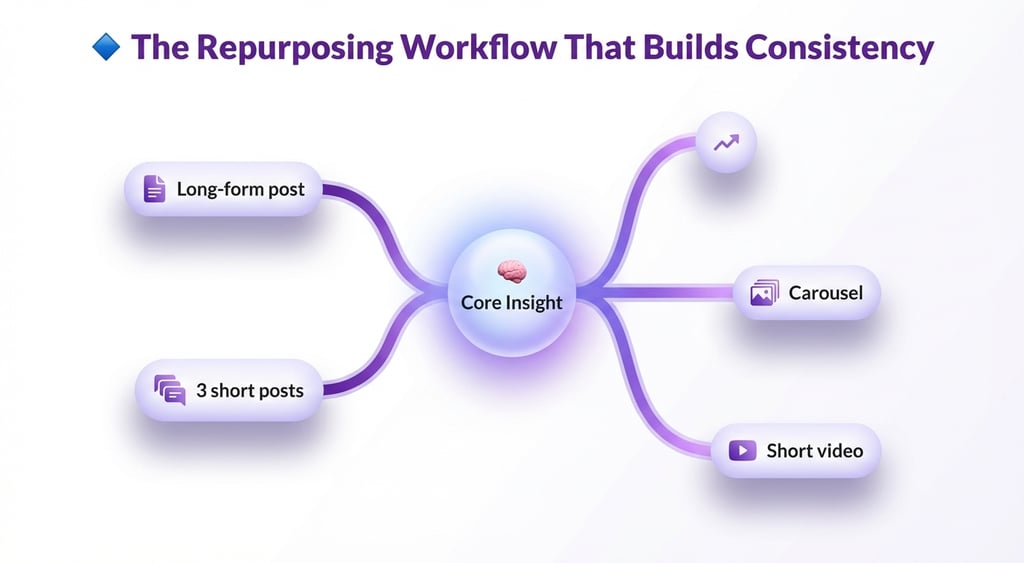
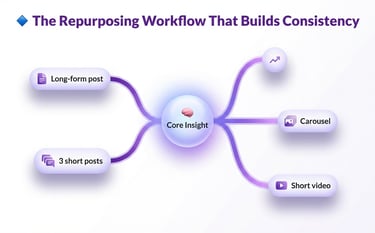
From one insight, you can create:
1 long-form post
3 short posts
1 carousel
1 short video
Repurposing isn’t laziness, it’s memory-building. And memory drives demand.
Solution 6: Track Metrics That Actually Predict Revenue
Ignore vanity metrics like likes.
Track what matters:
Profile views from ICP
Inbound demo requests
Strategic DM conversations
Engagement from decision-makers
Lead velocity from LinkedIn
Content → call conversion rate
These metrics indicate whether LinkedIn is strengthening your pipeline, not just your popularity.
Solution 7: Turn LinkedIn Into a Repeatable Revenue System
The founders who win aren’t gifted writers, they’re system builders.
Your system should include:
Weekly content workflow
Clear messaging strategy
Simple commenting routine
CRM tracking
Integration with GTM operations
This is exactly what Forsify helps founders build:
a LinkedIn engine that ties directly to revenue, not vanity metrics.
Conclusion
LinkedIn isn’t “just a social platform.”
It’s your credibility headquarters.
Founders who show up with clarity, consistency, and strategic messaging become the ones prospects want to work with, even before the first sales call.
And when credibility is built intentionally, it becomes one of the most powerful revenue levers in your entire GTM system.
Frequently asked questions
1. What exactly does Forsify do?
Forsify operates as an AI-powered marketing department that designs, builds, and runs growth systems end to end.
We engineer:
Market positioning and messaging
Authority and demand creation
Outbound, inbound, and nurturing systems
Continuous experimentation and optimization
Our goal is not “more leads” it’s predictable, scalable growth.
2. How is this different from a marketing agency?
Agencies execute tasks. Forsify creates and runs growth engines.
With Forsify, you get:
Growth architecture, not isolated campaigns
AI-driven execution across content, outreach, and nurturing
Continuous testing, iteration, and learning
One integrated system instead of disconnected tools and vendors
We function like a senior in-house marketing team, without the overhead.
3. What problems does Forsify solve?
Forsify solves structural growth problems, including:
Inconsistent demand and revenue volatility
High CAC from paid channels alone
Fragmented marketing tools and teams
Lack of ownership over growth strategy and execution
We replace guesswork with a repeatable, data-driven growth engine.
4. Who is this best suited for?
Forsify works best for:
B2B companies and startups with complex sales cycles
Teams selling high-ACV products or services
Founders who need growth without building a large internal team
If growth is strategic to your business, not an experiment, this is a fit.
5. What does the AI Marketing Department include?
Depending on your configuration, it may include:
Positioning, ICP, and messaging engineering
Authority-building content and thought leadership
Automated outbound and demand capture
Lead nurturing and conversion systems
Analytics, reporting, and optimization loops
All components are designed to work together as one system.
6. How long does it take to see results?
Growth is engineered in phases:
Setup Sprint:
Strategy, infrastructure, ICP, workflows, content, and channel warm-upExecution Phase:
The system goes live, compounds over time, and improves through testing
Meaningful traction typically appears within 20–40 days, with compounding results over time.
7. Is Forsify replacing our internal marketing team?
Not necessarily.
Forsify can:
Act as your entire marketing department, or
Work alongside internal teams to design and run growth engines
We integrate into your existing structure rather than compete with it.
8. How much involvement is required from our team?
Minimal executive involvement.
You’ll be involved in:
Strategic alignment and approvals
Monthly reviews and optimization decisions
Day-to-day execution is handled by Forsify and AI-powered systems
9. Do you only focus on outbound and pipelines?
No.
Pipeline creation is one outcome, not the product.
Forsify focuses on:
Demand creation
Brand authority
Conversion optimization
Long-term growth infrastructure
Pipelines improve because the system works, not because we push volume.
10. How do you measure success?
Success is measured by:
Growth in qualified demand
Conversion rates across the funnel
Cost efficiency versus internal teams
Strategic impact on revenue
KPIs are defined upfront based on your business model.
Forsify
Transform Your Business with AI.
149 New Montgomery st., San Francisco, CA
info@forsify.com
© 2026. All rights reserved.