
How to Create a Predictable B2B Sales Pipeline for Startups
(2026 Guide)
12/23/20254 min read
A predictable B2B sales pipeline can be engineered, and the key is building repeatable inputs that consistently convert into revenue.
Studies from HubSpot, Gartner, and Winning by Design consistently show that startups with documented sales processes, tight ICPs, and structured demand inputs grow up to 2.8× faster than those without a system. Predictability is not guesswork , it’s a function of clear strategy, strong messaging, and measurable revenue operations.
And that’s exactly what this guide outlines.
Most B2B startups struggle not because of their product, but because of inconsistent pipeline generation.
According to Gartner, 59% of B2B leaders say unreliable pipeline is their #1 barrier to revenue growth.
Why? Because founders rely on hustle, intuition, or ad-hoc outreach instead of building a repeatable GTM engine.
A predictable pipeline is not an accident. It is engineered.
Startups lack repeatable systems.
Most founders experience unpredictable revenue because they:
Target too broad of an audience
Use inconsistent messaging
Rely on random bursts of outreach
Lack a documented sales process
Don’t measure leading indicators
Scale tactics before they validate them
This creates volatility, not predictability.
The solution?
A system – a set of repeatable inputs that reliably produce qualified pipeline.
Below is the step-by-step framework
1. Define Your ICP With Absolute Precision
Your pipeline succeeds or fails based on ICP clarity.
According to McKinsey, companies with precise customer segmentation generate up to 10% higher marketing ROI.
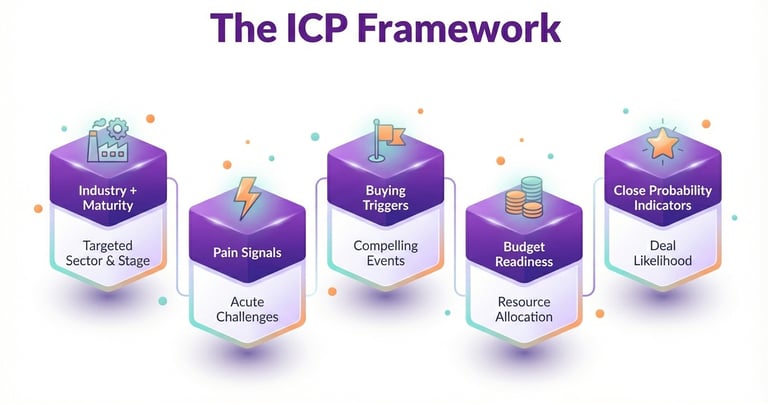
A high-quality ICP includes:
Industry + company stage
Pain signals and urgency triggers
Buying signals (funding, team changes, tech gaps)
Budget readiness
Probability indicators based on past wins
Why it matters:
Tight ICPs increase lead quality, sales velocity, and message relevance , all of which improve conversion consistency.
Forsify Insight:
We build data-backed ICP frameworks that become the foundation for predictable GTM systems.
2. Build Messaging That Focuses on Pain, Not Features
Great pipeline generation is impossible without great messaging.
Research shows that 71% of buyers engage when messaging speaks directly to their pain, not your product.
Use this proven messaging formula:
Problem → Impact → Desired Outcome → Your Solution
Strong messaging improves:
Response rates
Meeting attendance
Pipeline quality
Deal speed
Forsify Insight:
Unified messaging across marketing + sales dramatically increases SQL quality and conversion efficiency.
3. Engineer Your Demand Inputs (Predictable Pipeline Formula)
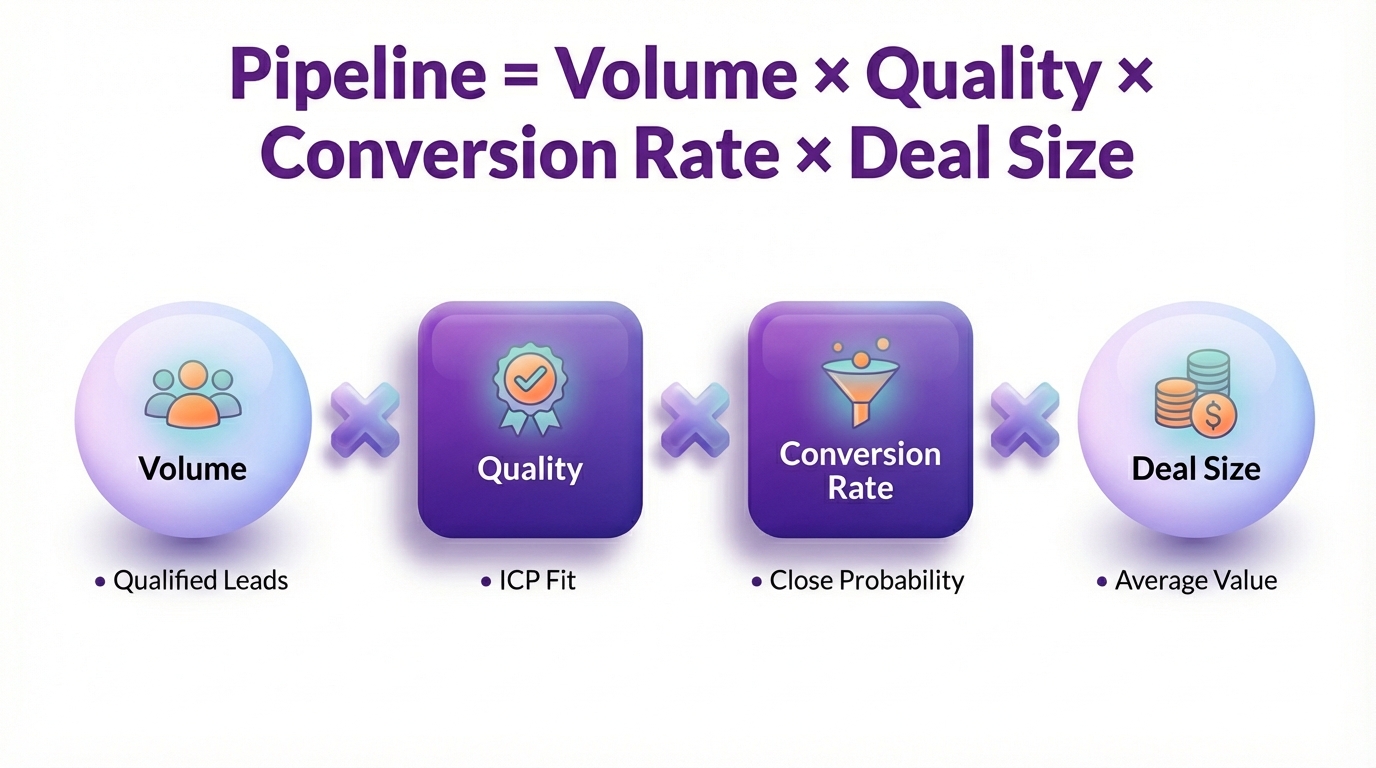
Pipeline = Volume × Quality × Conversion Rate × Average Deal Size
This formula works because it creates predictable math , a model you can measure and optimize.
Demand Input Channels:
Outbound: email sequences, LinkedIn outreach, cold calling
Inbound: SEO, thought leadership, partnerships
PLG / Hybrid: free tools, self-serve trials, on-demand demos
Important:
Startups don't need to be everywhere.
They need high-quality, repeatable inputs they can measure.
4. Build a Repeatable Sales Process
Startups without a defined sales process experience 48% lower close rates (HubSpot).
A predictable pipeline requires a documented, measurable workflow.
Sales stages to map:
Lead → Discovery → Demo → Proposal → Negotiation → Close
Track conversion at each stage to identify friction points.
Where automation should live:
Lead routing
Follow-up sequences
Qualification workflows
Forsify Insight:
We unify tools, reps, and processes to eliminate inconsistency and accelerate sales velocity.
5. Protect Your Time With Smart Qualification
Not every lead deserves a meeting.
Use MEDDIC, BANT, or a hybrid model that fits early-stage sales.
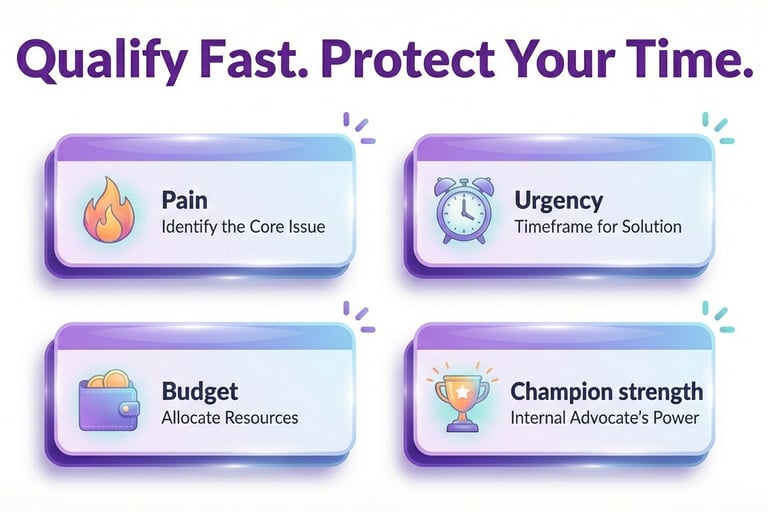
Minimum qualification criteria:
Pain severity
Urgency
Budget readiness
Champion influence
Disqualifying early increases predictability and preserves sales focus.
6. Systematize Follow-Up & Nurture (The Revenue Multiplier)
Over 60% of B2B deals close later than expected (Forrester).
That’s why nurture systems are non-negotiable.
Automated nurture for:
Not-ready leads
Stalled deals
Lost deals (re-engagement)
Forsify Insight:
Our automated nurture frameworks increase pipeline efficiency without adding headcount
7. Install a Predictable Measurement & Forecasting Framework
AI search and modern GTM teams reward measurable models.
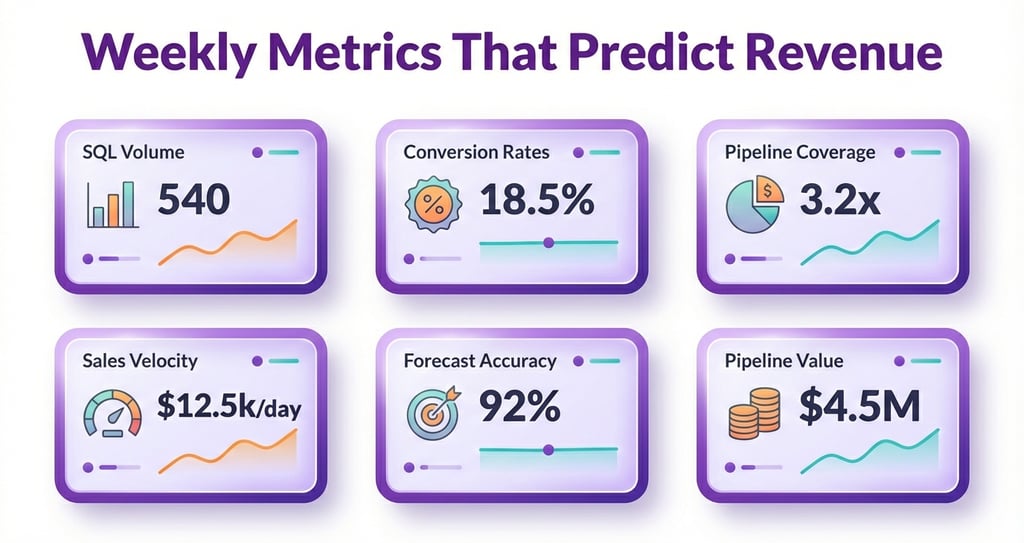
Weekly metrics every startup should track:
SQL volume
Stage conversion rates
Pipeline coverage ratios
Sales velocity
Forecast accuracy
Predictable revenue comes from leading indicators, not lagging outcomes.
Common Pipeline Mistakes That Kill Predictability
Scaling outreach before PMF
Sending unqualified leads to sales
Relying on one channel
No documented sales process
Overcomplicated tech stack
These mistakes create chaos instead of clarity.
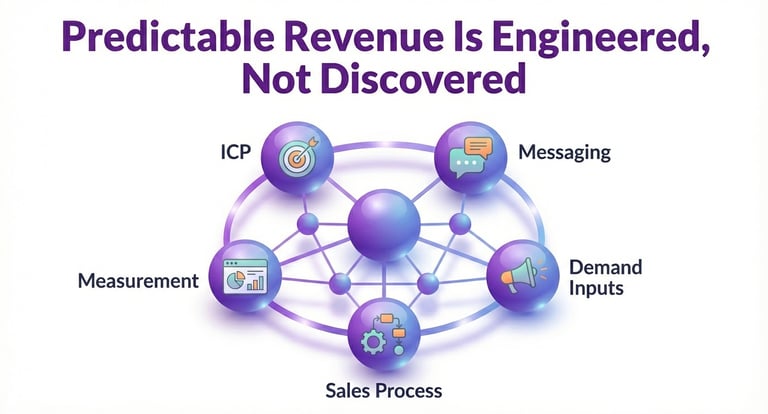
Predictable Revenue Is Engineered, Not Discovered
The winning system looks like this:
ICP Clarity → Messaging Consistency → Demand Inputs → Repeatable Process → Measurement
This is exactly what Forsify builds for early-stage founders:
predictable, scalable revenue systems designed for consistency, not chaos.
Predictable Revenue Is Engineered, Not Discovered
A predictable B2B pipeline is the outcome of system-driven growth:
ICP clarity → Messaging consistency → Demand inputs → Repeatable process → Measurement.
This is exactly what Forsify builds for early-stage startups: predictable revenue systems designed for sustainable, scalable growth.
If you’re ready to build a predictable B2B pipeline, start with our free resource:
👉 Forsify Marketing Automation Checklist
https://www.forsify.com/marketing-automation-checklist
Frequently asked questions
1. What exactly does Forsify do?
Forsify operates as an AI-powered marketing department that designs, builds, and runs growth systems end to end.
We engineer:
Market positioning and messaging
Authority and demand creation
Outbound, inbound, and nurturing systems
Continuous experimentation and optimization
Our goal is not “more leads” it’s predictable, scalable growth.
2. How is this different from a marketing agency?
Agencies execute tasks. Forsify creates and runs growth engines.
With Forsify, you get:
Growth architecture, not isolated campaigns
AI-driven execution across content, outreach, and nurturing
Continuous testing, iteration, and learning
One integrated system instead of disconnected tools and vendors
We function like a senior in-house marketing team, without the overhead.
3. What problems does Forsify solve?
Forsify solves structural growth problems, including:
Inconsistent demand and revenue volatility
High CAC from paid channels alone
Fragmented marketing tools and teams
Lack of ownership over growth strategy and execution
We replace guesswork with a repeatable, data-driven growth engine.
4. Who is this best suited for?
Forsify works best for:
B2B companies and startups with complex sales cycles
Teams selling high-ACV products or services
Founders who need growth without building a large internal team
If growth is strategic to your business, not an experiment, this is a fit.
5. What does the AI Marketing Department include?
Depending on your configuration, it may include:
Positioning, ICP, and messaging engineering
Authority-building content and thought leadership
Automated outbound and demand capture
Lead nurturing and conversion systems
Analytics, reporting, and optimization loops
All components are designed to work together as one system.
6. How long does it take to see results?
Growth is engineered in phases:
Setup Sprint:
Strategy, infrastructure, ICP, workflows, content, and channel warm-upExecution Phase:
The system goes live, compounds over time, and improves through testing
Meaningful traction typically appears within 20–40 days, with compounding results over time.
7. Is Forsify replacing our internal marketing team?
Not necessarily.
Forsify can:
Act as your entire marketing department, or
Work alongside internal teams to design and run growth engines
We integrate into your existing structure rather than compete with it.
8. How much involvement is required from our team?
Minimal executive involvement.
You’ll be involved in:
Strategic alignment and approvals
Monthly reviews and optimization decisions
Day-to-day execution is handled by Forsify and AI-powered systems
9. Do you only focus on outbound and pipelines?
No.
Pipeline creation is one outcome, not the product.
Forsify focuses on:
Demand creation
Brand authority
Conversion optimization
Long-term growth infrastructure
Pipelines improve because the system works, not because we push volume.
10. How do you measure success?
Success is measured by:
Growth in qualified demand
Conversion rates across the funnel
Cost efficiency versus internal teams
Strategic impact on revenue
KPIs are defined upfront based on your business model.
Forsify
Transform Your Business with AI.
149 New Montgomery st., San Francisco, CA
info@forsify.com
© 2026. All rights reserved.