
LinkedIn Post Types That Engage Decision-Makers and Generate B2B Leads
Learn which LinkedIn post types actually engage decision-makers and generate B2B leads, backed by data, buyer behavior, and real-world examples.
2/3/20266 min read
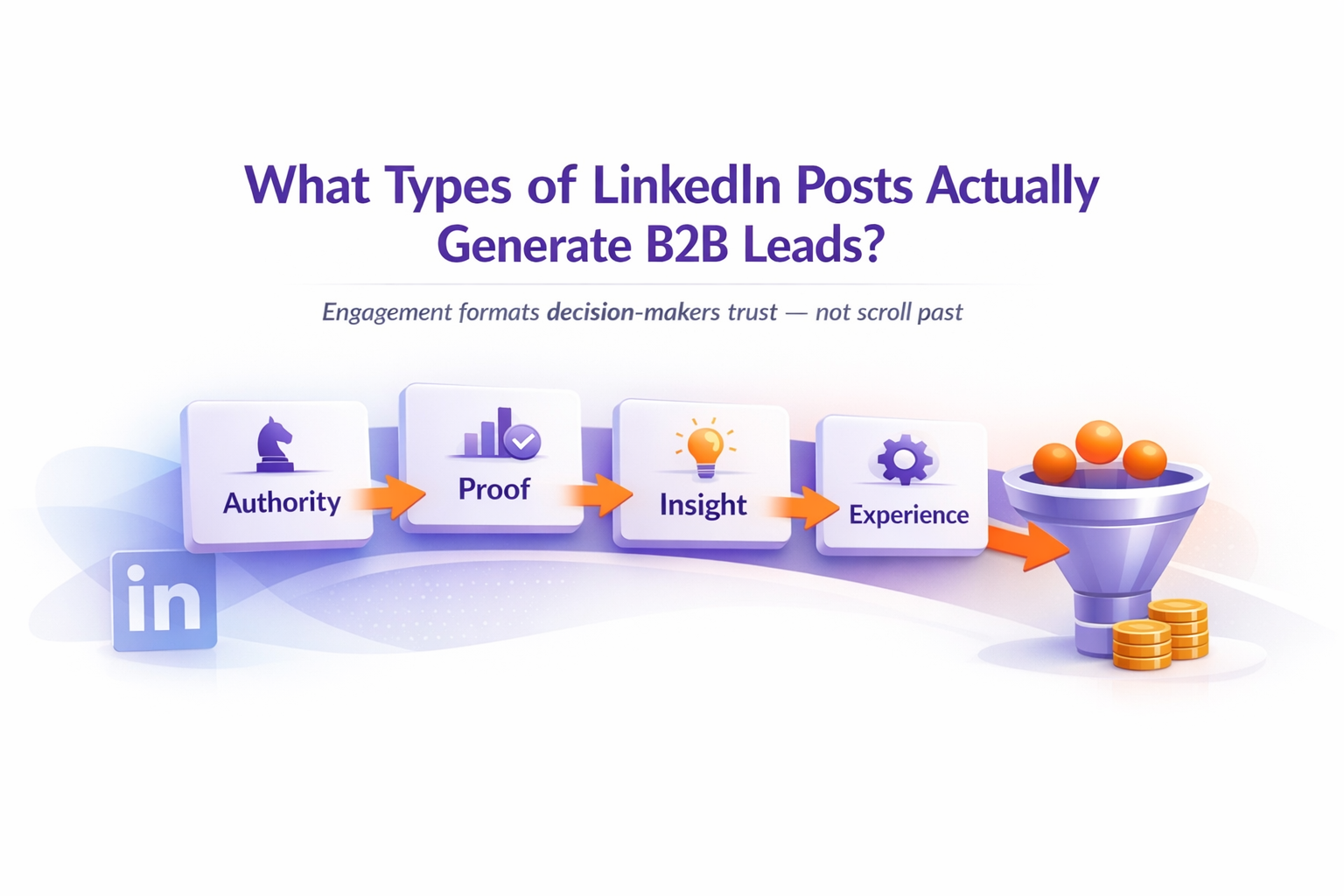
The LinkedIn posts that engage decision-makers and generate leads are authority-driven insights, founder stories, proof-based case studies, problem-aware educational posts, and concise high-signal text or carousel content. These formats consistently outperform generic brand updates because they align with how decision-makers actually use LinkedIn: to spot credible thinkers, validate solutions, and decide who is worth talking to.
The short answer (upfront)
If you want leads, not just likes, your LinkedIn posts must demonstrate relevance, credibility, and proof within seconds. Decision-makers engage with content that helps them think better, avoid mistakes, or recognize patterns they’re already experiencing in their business.
Below, you’ll find the context, the problem with most LinkedIn content, and a practical breakdown of what to post, why it works, and how to turn engagement into real pipeline, supported by data and industry research.
Why LinkedIn Matters for B2B Leads
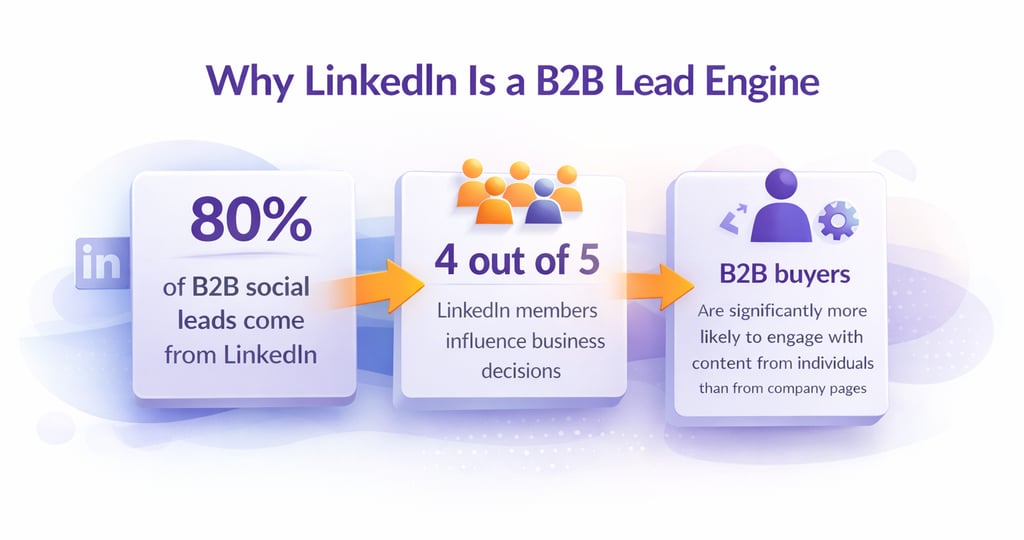
LinkedIn is the dominant social platform for B2B decision-makers. According to LinkedIn’s own data:
80% of B2B leads from social media come from LinkedIn
4 out of 5 LinkedIn members influence business decisions
B2B buyers are significantly more likely to engage with content from individuals than from company pages
This means LinkedIn isn’t just a visibility channel, it’s a pre-sales environment where trust and authority are built before a conversation ever starts.
The Problem: Why Most LinkedIn Posts Don’t Generate Leads
The majority of LinkedIn content fails because it optimizes for:
Likes instead of conversations
Motivation instead of insight
Volume instead of relevance
Decision-makers are busy. They scroll LinkedIn to:
Validate ideas they’re already considering
Learn from peers who’ve “been there”
Identify operators who understand their problems
Generic thought leadership, AI-generated fluff, and polished brand posts don’t meet those needs, so they get ignored.
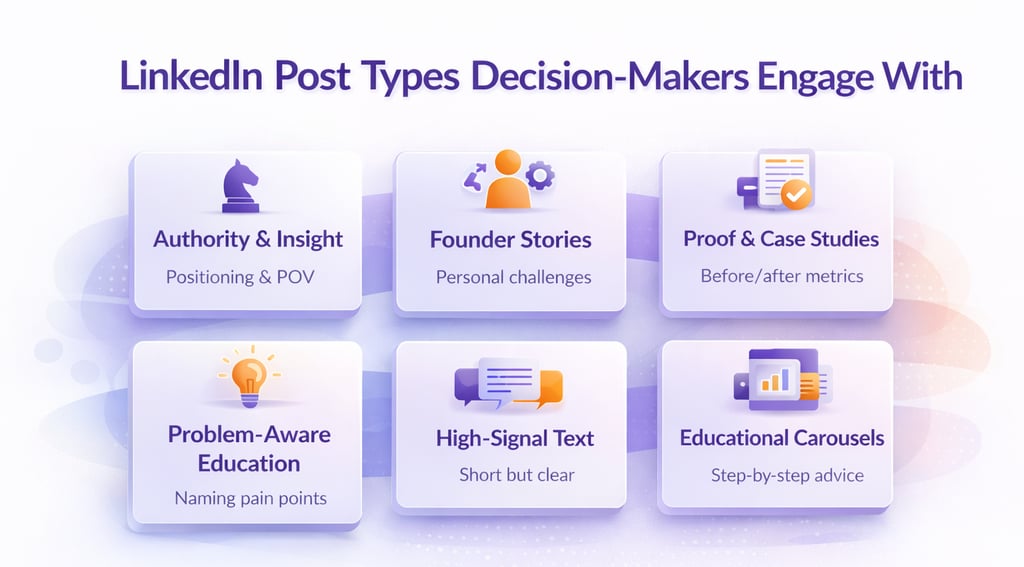
What Actually Works: LinkedIn Post Types That Engage Decision-Makers
1. Authority & Insight Posts (Positioning Content)
These posts establish how you think, not just what you sell.
Why they work
Decision-makers are drawn to people with clear points of view. Strong opinions signal experience and confidence, two traits buyers look for before starting a conversation.
What to post
Contrarian takes on industry norms
Frameworks or mental models you actually use
Lessons learned from real execution
Example angles
“Most outbound fails because teams optimize tools instead of systems.”
“If I had to rebuild our GTM from scratch, here’s what I wouldn’t do.”
Result
Inbound DMs from people who already agree with your worldview, shortening sales cycles significantly.
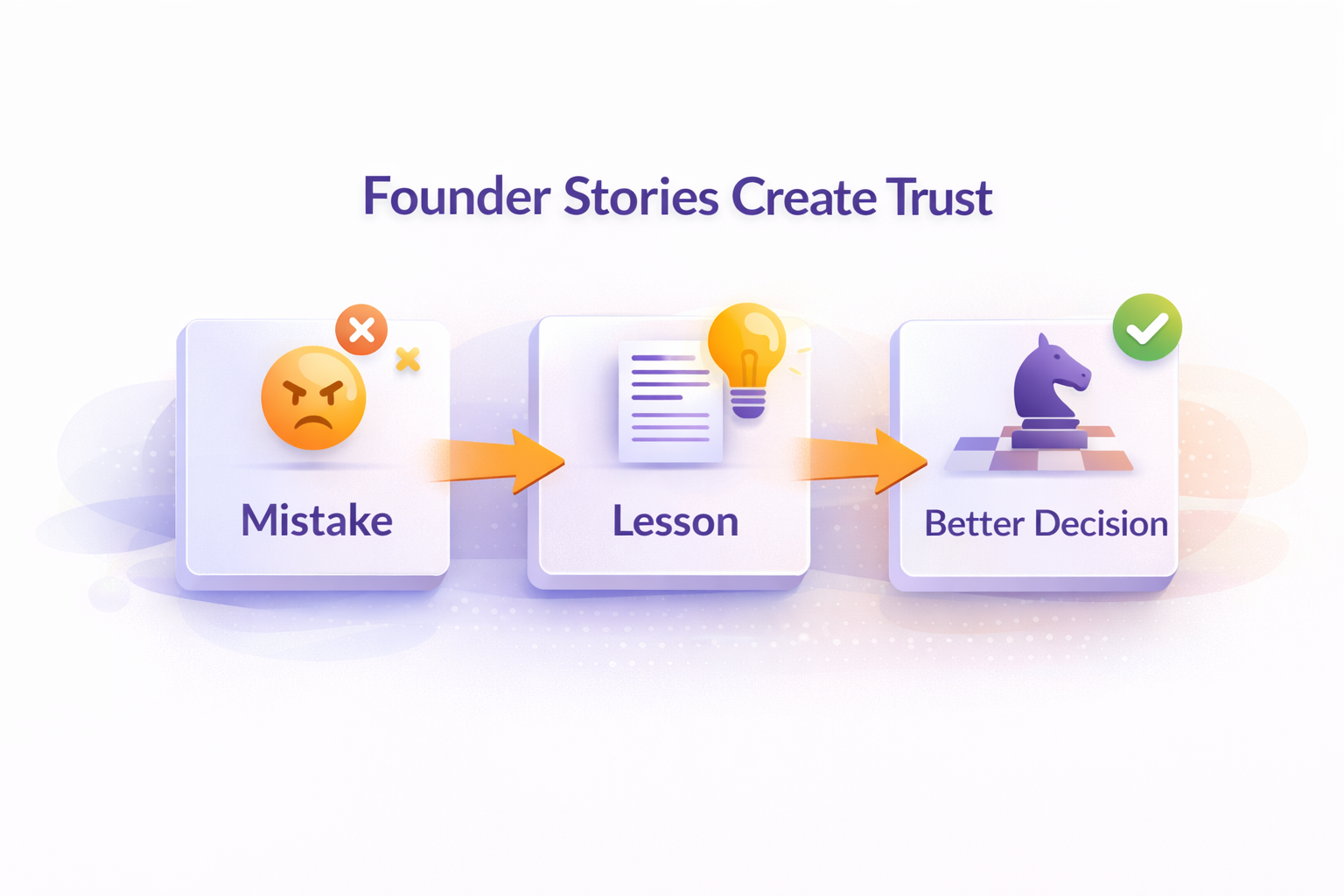
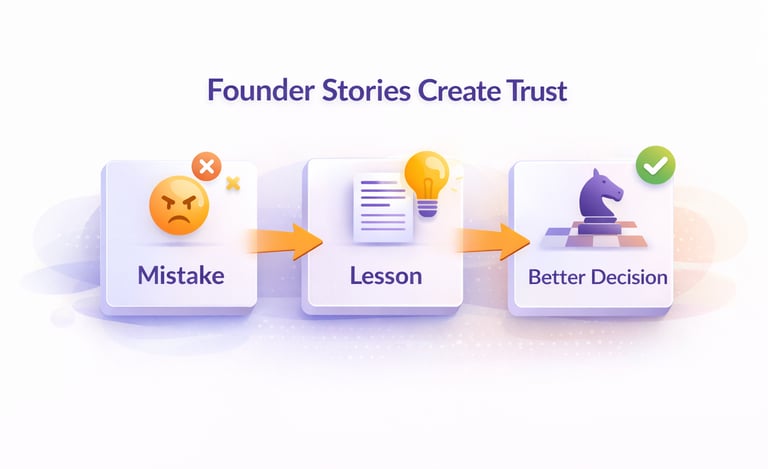
2. Founder Stories & Lessons Learned
Founder-led storytelling consistently outperforms brand content in reach and engagement.
Why it works
Research on B2B buyer behavior shows trust increases when leaders share:
Mistakes
Trade-offs
Behind-the-scenes decisions
This type of content humanizes expertise without sacrificing credibility.
What to include
A real challenge you faced
What went wrong
What you’d do differently now
Key insight
Vulnerability builds trust when paired with competence. The goal isn’t oversharing, it’s showing lived experience.
3. Case Studies & Proof-Based Posts
Decision-makers want evidence before conversations.
Why they work
According to multiple B2B marketing studies, case studies are among the top 3 most trusted content formats for buyers evaluating solutions.
Effective formats
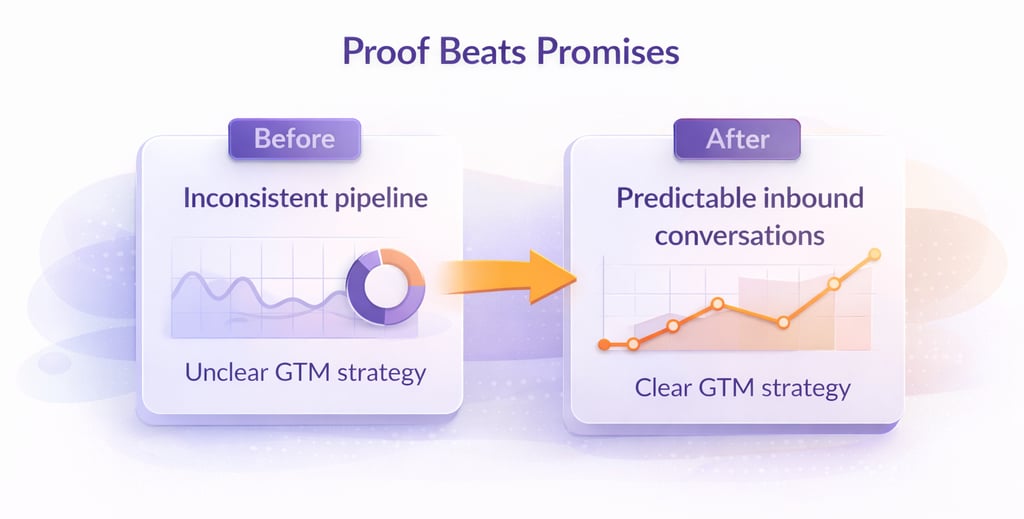
Before → After metrics (with context)
What you tried, what failed, what worked
Results tied to a clear strategy, not luck
Important
Avoid hype. Over-polished results posts trigger skepticism. Specificity builds credibility.
4. Problem-Aware Educational Content
This content names problems decision-makers already feel, but may not have fully articulated.
Why it works
B2B buyers are often problem-aware before they’re solution-aware. Content that sharpens their understanding creates demand naturally.
Examples
“Your pipeline looks full, but here’s why it’s fragile.”
“Why hiring more SDRs won’t fix outbound.”
Impact
These posts generate comments, saves, and DMs because they create recognition without pitching.
5. Short, High-Signal Text Posts
Despite new formats, plain text posts still dominate LinkedIn engagement.
Why they work
Fast to consume
Easy to react to
Prioritized by LinkedIn’s algorithm when engagement happens quickly
Best practices
One clear idea per post
Strong opening hook
Clear opinion or takeaway
Decision-makers don’t need long explanations, they need clarity.
6. Educational Carousels (Used Strategically)
Carousels work when they teach, not entertain.
Best use cases
Step-by-step frameworks
GTM or sales process breakdowns
Strategic checklists
Data point
Carousel posts consistently rank among the highest “dwell time” formats on LinkedIn, which boosts reach, when the content is practical.
What to Avoid If You Want Leads (Not Just Likes)
Generic motivational quotes
Overly branded company announcements
AI-written posts with no POV
Soft CTAs that don’t invite conversation
High engagement without relevance = low-quality pipeline.
How to Turn Engagement Into Leads
Posting alone doesn’t generate leads, conversation does.
Best practices
Reply thoughtfully to comments (not emojis)
Start private conversations based on shared context
Reference the post when following up
A simple rule: Every good post should create at least one reason for someone to DM you, or for you to DM them.
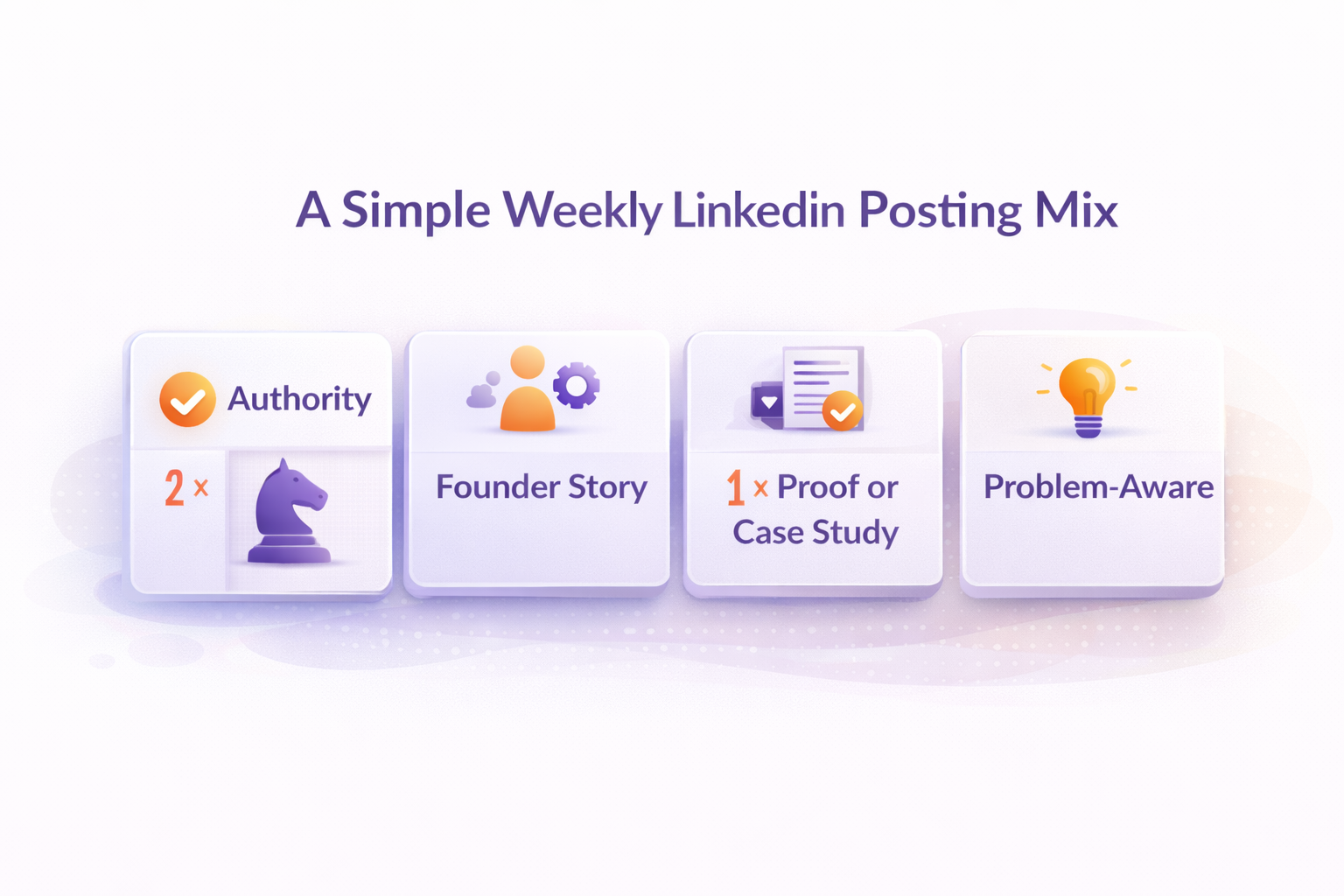
A Simple Weekly LinkedIn Posting Framework
To stay consistent without burnout:
2 authority or insight posts
1 founder story or lesson
1 proof or case study post
1 problem-aware educational post
This mix compounds reach, credibility, and trust over time.
Conclusion: LinkedIn as a Predictable Lead Engine
Decision-makers don’t buy from LinkedIn posts, they buy from people who consistently demonstrate relevance, insight, and proof. When done right, LinkedIn becomes a long-term asset that:
Warms up prospects before sales calls
Shortens deal cycles
Creates inbound opportunities without paid ads
Relevance gets attention. Proof builds trust. Consistency creates leads.
If you’d like, I can adapt this article into:
A LinkedIn content playbook
A founder-led posting calendar
Or a system for turning LinkedIn engagement into booked meetings
Just say the word.
Frequently asked questions
1. What exactly does Forsify do?
Forsify operates as an AI-powered marketing department that designs, builds, and runs growth systems end to end.
We engineer:
Market positioning and messaging
Authority and demand creation
Outbound, inbound, and nurturing systems
Continuous experimentation and optimization
Our goal is not “more leads” it’s predictable, scalable growth.
2. How is this different from a marketing agency?
Agencies execute tasks. Forsify creates and runs growth engines.
With Forsify, you get:
Growth architecture, not isolated campaigns
AI-driven execution across content, outreach, and nurturing
Continuous testing, iteration, and learning
One integrated system instead of disconnected tools and vendors
We function like a senior in-house marketing team, without the overhead.
3. What problems does Forsify solve?
Forsify solves structural growth problems, including:
Inconsistent demand and revenue volatility
High CAC from paid channels alone
Fragmented marketing tools and teams
Lack of ownership over growth strategy and execution
We replace guesswork with a repeatable, data-driven growth engine.
4. Who is this best suited for?
Forsify works best for:
B2B companies and startups with complex sales cycles
Teams selling high-ACV products or services
Founders who need growth without building a large internal team
If growth is strategic to your business, not an experiment, this is a fit.
5. What does the AI Marketing Department include?
Depending on your configuration, it may include:
Positioning, ICP, and messaging engineering
Authority-building content and thought leadership
Automated outbound and demand capture
Lead nurturing and conversion systems
Analytics, reporting, and optimization loops
All components are designed to work together as one system.
6. How long does it take to see results?
Growth is engineered in phases:
Setup Sprint:
Strategy, infrastructure, ICP, workflows, content, and channel warm-upExecution Phase:
The system goes live, compounds over time, and improves through testing
Meaningful traction typically appears within 20–40 days, with compounding results over time.
7. Is Forsify replacing our internal marketing team?
Not necessarily.
Forsify can:
Act as your entire marketing department, or
Work alongside internal teams to design and run growth engines
We integrate into your existing structure rather than compete with it.
8. How much involvement is required from our team?
Minimal executive involvement.
You’ll be involved in:
Strategic alignment and approvals
Monthly reviews and optimization decisions
Day-to-day execution is handled by Forsify and AI-powered systems
9. Do you only focus on outbound and pipelines?
No.
Pipeline creation is one outcome, not the product.
Forsify focuses on:
Demand creation
Brand authority
Conversion optimization
Long-term growth infrastructure
Pipelines improve because the system works, not because we push volume.
10. How do you measure success?
Success is measured by:
Growth in qualified demand
Conversion rates across the funnel
Cost efficiency versus internal teams
Strategic impact on revenue
KPIs are defined upfront based on your business model.
Forsify
Transform Your Business with AI.
149 New Montgomery st., San Francisco, CA
info@forsify.com
© 2026. All rights reserved.