
Shorten B2B Sales Cycles with Smarter Targeting: 7 Proven Ways to Close Deals Faster
Shorten B2B Sales Cycles with Smarter Targeting by focusing on buyer intent, decision-makers, and real purchase timing. Learn how precision targeting reduces deal delays, improves close rates, and accelerates revenue growth.
2/24/20265 min read
Let’s be honest for a second.
Most B2B sales cycles aren’t long because buyers are “slow” or indecisive.
They’re long because sales teams are spending time with people who were never going to buy in the first place.
If that sounds familiar, you’re not alone.
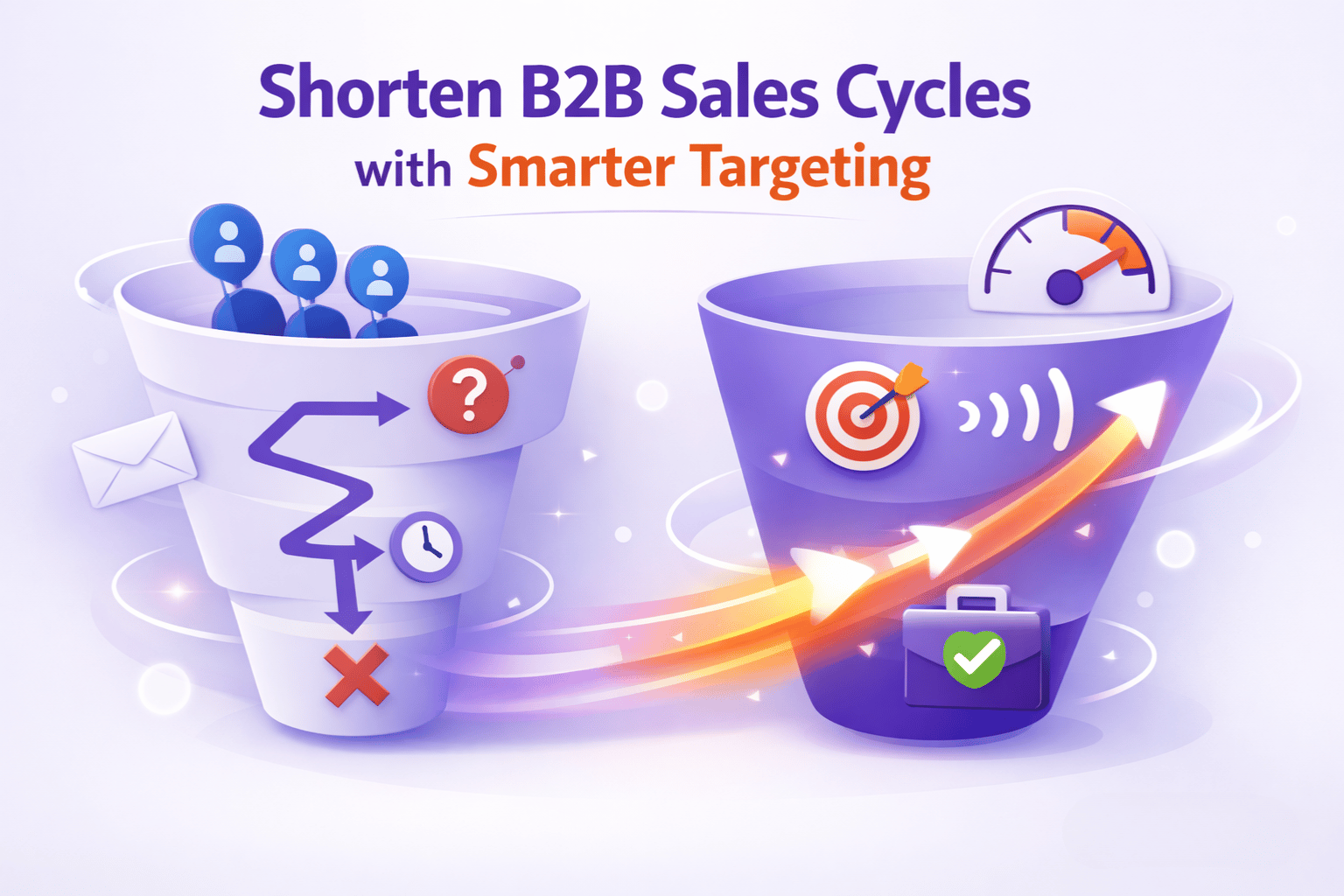
Long deal cycles usually aren’t a sales execution problem.
They’re a targeting problem.
And the good news? That means they’re fixable.
Why B2B Sales Cycles Feel Longer Than Ever
If your team is doing everything “right”, outbound, follow-ups, demos, proposals, but deals still drag on, here’s what’s usually happening behind the scenes:
You’re talking to accounts that don’t actually feel the pain yet
You’re selling to people who can’t make the final decision
You’re spending half the sales cycle educating instead of closing
Marketing and sales are optimizing for lead volume, not buyer readiness
The result?
More calls. More emails. More “check-ins.”
And deals that stall in endless internal discussions.
This isn’t about working harder.
It’s about working on the wrong opportunities.
What “Smarter Targeting” Actually Means (Hint: It’s Not Just ICPs)
Most teams say they have an ICP.
In reality, they have a broad description and hope sales figures it out.
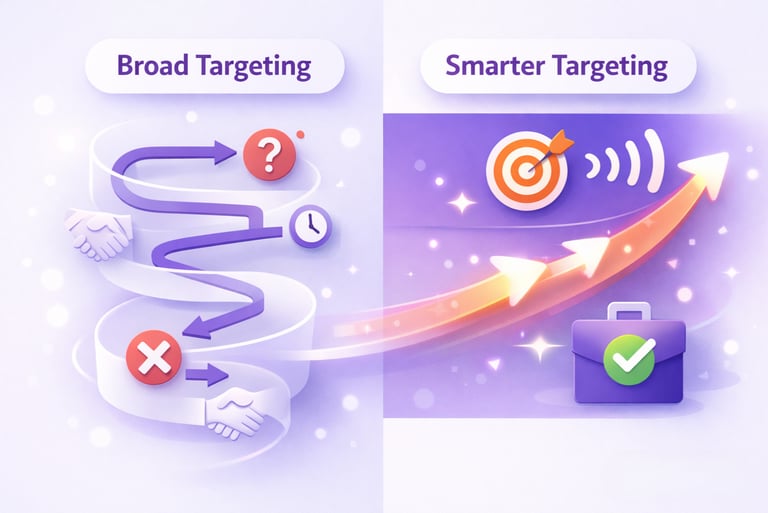
Smarter targeting goes deeper. It answers four critical questions:
Who is this really for?
Not just industry or company size, but revenue stage, GTM maturity, and real constraints.Who actually buys?
The difference between an influencer and an economic buyer can add months to a deal.Why now?
Timing matters more than interest. Are there real buying signals?What problem do they already know they have?
Selling to problem-aware buyers is completely different from selling to curious ones.
When targeting answers these questions, sales conversations change fast.
How Smarter Targeting Shortens Sales Cycles (Directly)
Here’s where things click.
When targeting is tight, sales cycles don’t need to be “managed”, they move naturally.
Why?
The account already recognizes the problem
The persona already has decision authority
The urgency already exists
The conversation is about fit, not persuasion
Instead of:
“Let me explain why this matters…”
Sales becomes:
“Here’s how we solve what you’re already dealing with.”
That’s the difference between chasing and closing.
Speed Is a Revenue Advantage (Not Just a Sales Metric)
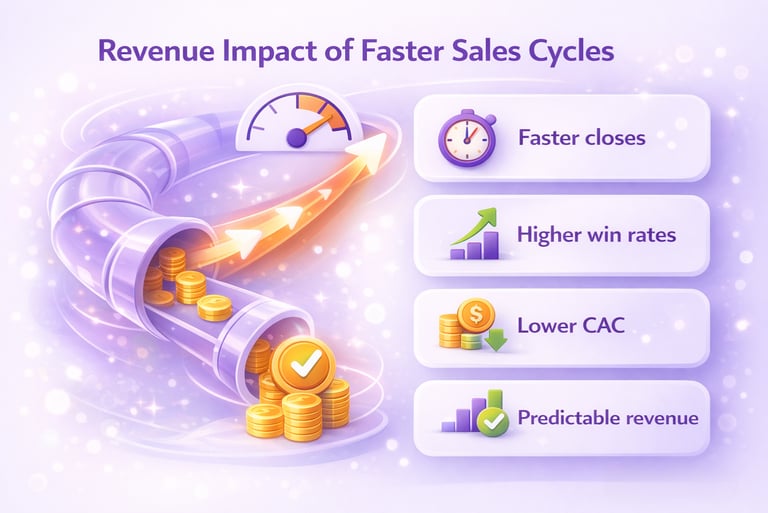
Shorter sales cycles don’t just feel better, they compound growth.
When targeting improves, you also get:
More predictable forecasting
Higher close rates
Lower CAC
More capacity without hiring more reps
In other words, speed isn’t a nice-to-have.
It’s a revenue operations advantage.
This is why high-performing teams obsess over who enters the pipeline, not just how many leads they generate.
Where Most Teams Get Stuck
Here’s the trap:
Marketing is measured on volume.
Sales is measured on revenue.
Targeting lives somewhere in the middle, owned by no one.
So what happens?
Marketing sends “qualified” leads
Sales cherry-picks the ones that feel real
Everyone debates pipeline quality after the quarter ends
The fix isn’t more meetings.
It’s systems that surface the right accounts automatically.
How Forsify Helps Teams Close Faster with Precision Targeting
At Forsify, we don’t help teams sell harder.
We help them sell to the right buyers.
That means:
Refining ICPs based on revenue reality, not theory
Mapping real buying committees
Using signals and behavior to identify buying intent
Aligning marketing, sales, and RevOps around one definition of “worth pursuing”
When targeting becomes a system, not a guess, sales cycles shrink on their own.
Quick Takeaways You Can Apply Immediately
If you want shorter sales cycles, start here:
Tighten your ICP before scaling outreach
Prioritize intent and timing over lead volume
Stop selling to people who can’t say yes
Treat targeting as a living revenue system, not a one-time exercise
Small changes in targeting create massive changes in speed.
Your Next Step
If your sales cycle feels too long, chances are your targeting is too loose.
We’ve broken down the exact systems high-performing B2B teams use to attract buyers who are ready, qualified, and able to decide.
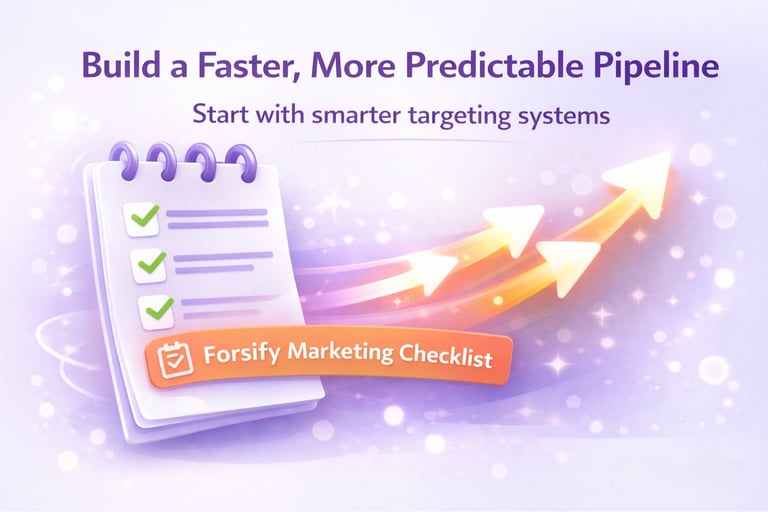
👉 Get the Forsify Marketing Checklist
🔗 https://www.forsify.com/marketing-automation-checklist
It’s a practical starting point to build a faster, more predictable pipeline, without adding more noise.
Frequently asked questions
1. What exactly does Forsify do?
Forsify operates as an AI-powered marketing department that designs, builds, and runs growth systems end to end.
We engineer:
Market positioning and messaging
Authority and demand creation
Outbound, inbound, and nurturing systems
Continuous experimentation and optimization
Our goal is not “more leads” it’s predictable, scalable growth.
2. How is this different from a marketing agency?
Agencies execute tasks. Forsify creates and runs growth engines.
With Forsify, you get:
Growth architecture, not isolated campaigns
AI-driven execution across content, outreach, and nurturing
Continuous testing, iteration, and learning
One integrated system instead of disconnected tools and vendors
We function like a senior in-house marketing team, without the overhead.
3. What problems does Forsify solve?
Forsify solves structural growth problems, including:
Inconsistent demand and revenue volatility
High CAC from paid channels alone
Fragmented marketing tools and teams
Lack of ownership over growth strategy and execution
We replace guesswork with a repeatable, data-driven growth engine.
4. Who is this best suited for?
Forsify works best for:
B2B companies and startups with complex sales cycles
Teams selling high-ACV products or services
Founders who need growth without building a large internal team
If growth is strategic to your business, not an experiment, this is a fit.
5. What does the AI Marketing Department include?
Depending on your configuration, it may include:
Positioning, ICP, and messaging engineering
Authority-building content and thought leadership
Automated outbound and demand capture
Lead nurturing and conversion systems
Analytics, reporting, and optimization loops
All components are designed to work together as one system.
6. How long does it take to see results?
Growth is engineered in phases:
Setup Sprint:
Strategy, infrastructure, ICP, workflows, content, and channel warm-upExecution Phase:
The system goes live, compounds over time, and improves through testing
Meaningful traction typically appears within 20–40 days, with compounding results over time.
7. Is Forsify replacing our internal marketing team?
Not necessarily.
Forsify can:
Act as your entire marketing department, or
Work alongside internal teams to design and run growth engines
We integrate into your existing structure rather than compete with it.
8. How much involvement is required from our team?
Minimal executive involvement.
You’ll be involved in:
Strategic alignment and approvals
Monthly reviews and optimization decisions
Day-to-day execution is handled by Forsify and AI-powered systems
9. Do you only focus on outbound and pipelines?
No.
Pipeline creation is one outcome, not the product.
Forsify focuses on:
Demand creation
Brand authority
Conversion optimization
Long-term growth infrastructure
Pipelines improve because the system works, not because we push volume.
10. How do you measure success?
Success is measured by:
Growth in qualified demand
Conversion rates across the funnel
Cost efficiency versus internal teams
Strategic impact on revenue
KPIs are defined upfront based on your business model.
Forsify
Transform Your Business with AI.
149 New Montgomery st., San Francisco, CA
info@forsify.com
© 2026. All rights reserved.