
The Best AI Tools for B2B Content Creation in 2026
AI tools for B2B content creation help teams scale output, improve consistency, and drive pipeline. Discover the best AI tools and how to use them for real revenue impact.
1/13/20264 min read
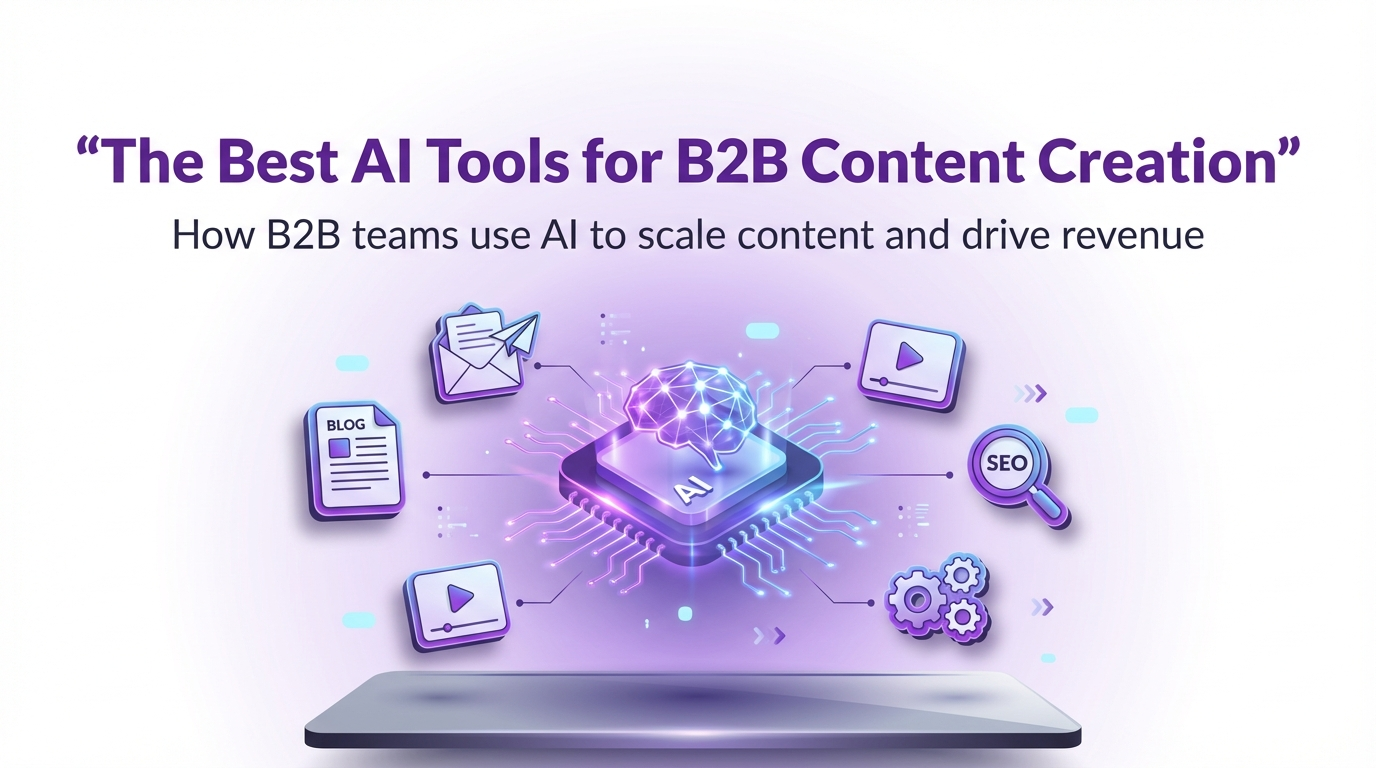
AI tools for B2B content creation help teams produce more consistent, high-quality, revenue-focused content, even with limited resources.
And the short answer to the main question, “Which AI tools are actually the best for B2B content creation?”, is this:
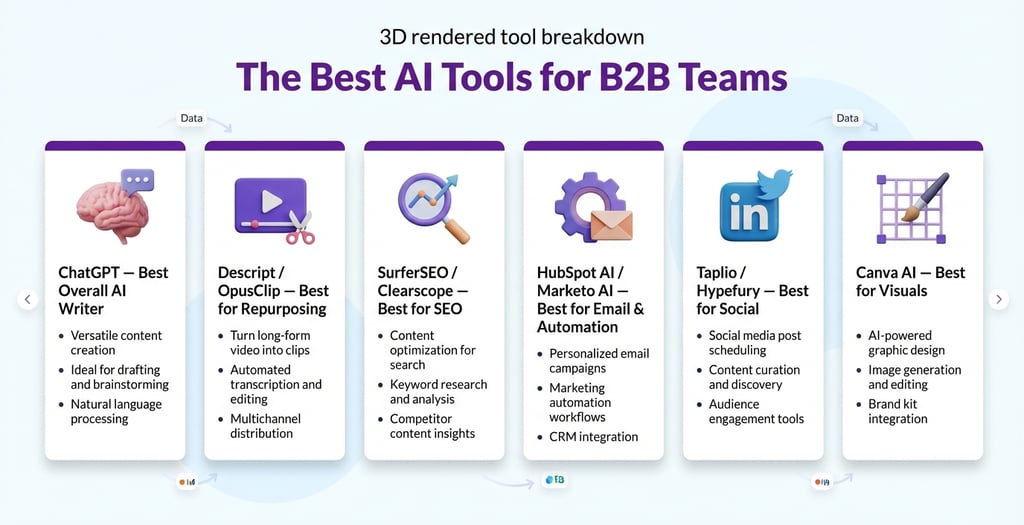
➡️ ChatGPT (Enterprise/Team) for writing
➡️ Descript/OpusClip for repurposing
➡️ SurferSEO/Clearscope for ranking
➡️ HubSpot AI/Marketo AI for email + automation
➡️ Taplio/Hypefury for social distribution
➡️ Canva AI for visuals
These tools consistently outperform others because they support scalable, predictable, and revenue-driven content operations, a claim backed by multiple industry studies.
According to Gartner, 80% of B2B marketing teams are integrating AI into content workflows to increase production without adding headcount.
And McKinsey reports AI can automate up to 60% of tasks within marketing, including research, drafting, analysis, and repurposing.
Why this matters right now
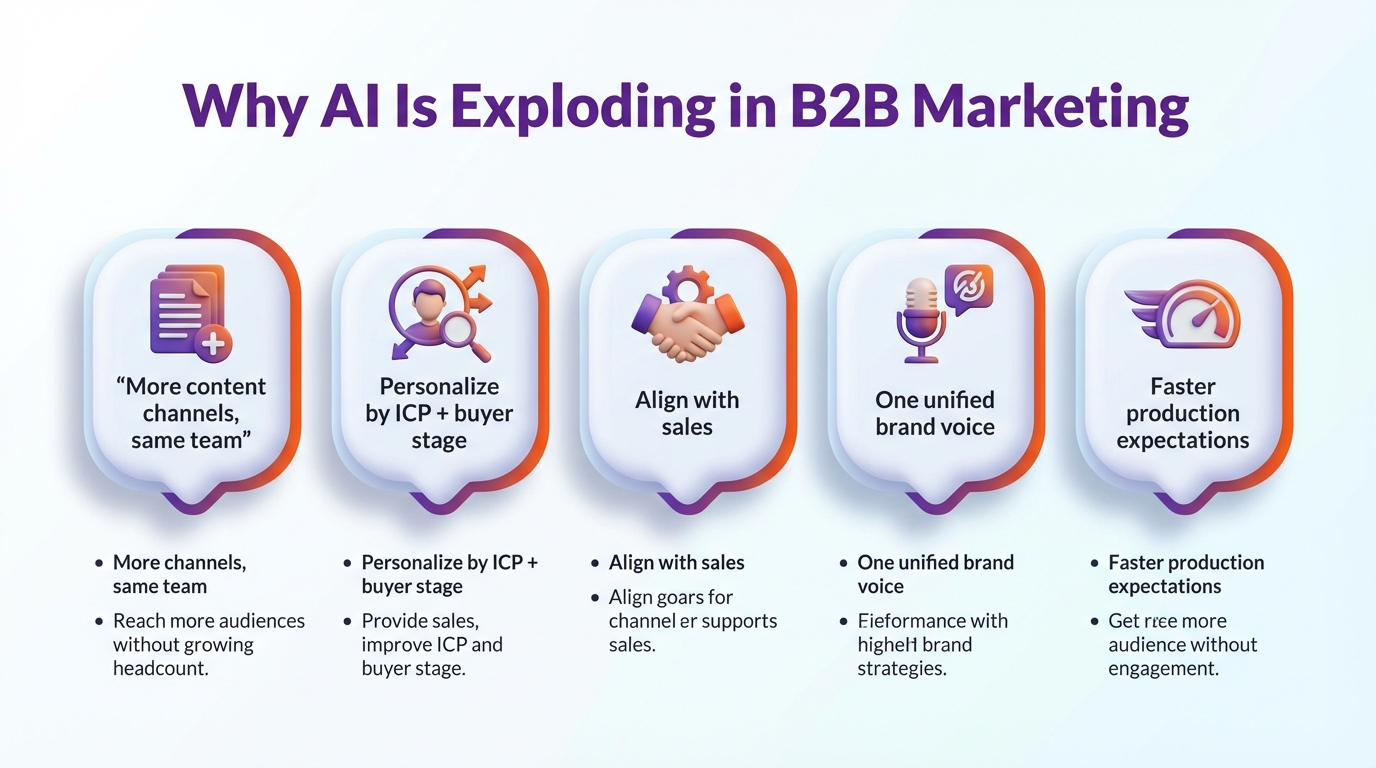
B2B teams are expected to produce more content, for more channels, with more personalization, but rarely with more people.
AI solves this output problem only when paired with strong ICP clarity, messaging, and revenue operations.
At Forsify, we’ve seen this with every client:
➡️ AI doesn’t replace strategy, it amplifies it.
The Problem Most B2B Teams Face
Before diving into the tools, it’s important to understand why teams feel overwhelmed:
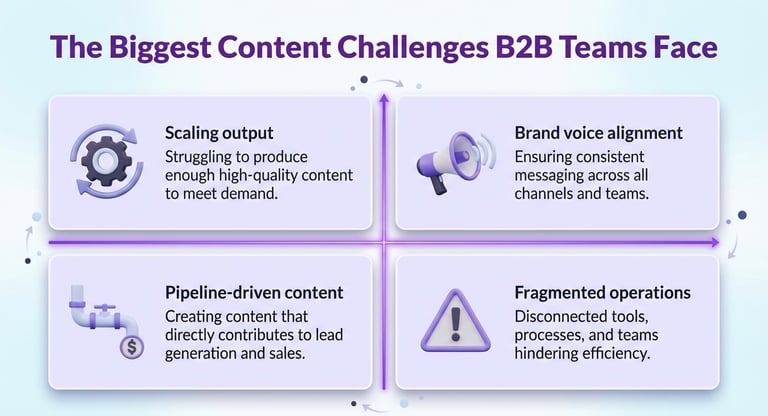
Scaling output without losing clarity
More channels, same team → inconsistent quality.Maintaining a unified brand voice
Multiple writers = multiple tones, unless AI enforces alignment.Producing content that actually drives pipeline
Traffic ≠ revenue. Most content doesn’t move buyers forward.Fragmented marketing + sales operations
Without alignment, content loses purpose and momentum.
AI can solve all four, but only if the right tools and systems are in place.
The Best AI Tools for B2B Content Creation
(explained with insight, use cases, and why they matter for revenue)
1. Best Overall AI Writer → ChatGPT (Enterprise or Team)
The most powerful B2B writing engine.
Use it for:
Blog drafts
SEO outlines
Email sequences
Webinar scripts
Repurposing long-form content
Sales enablement materials
Why it works:
ChatGPT maintains tone consistency across all assets, the #1 challenge in B2B content ops.
Research-backed:
OpenAI reports that teams using ChatGPT for first drafts reduce production time by 40–60%.
2. Best for Repurposing Content → Descript / OpusClip
Turn a 45-minute webinar into 20–30 assets.
Outputs include:
LinkedIn short clips
Quote graphics
Blog summaries
Video captions
Clean transcripts
Perfect for overstretched teams.
3. Best for SEO-Optimized Content → SurferSEO / Clearscope
If ranking matters, these are essential.
They provide:
Keyword insights
Content scoring
SERP competitor analysis
Smart outlines
Optimization suggestions
Proof:
Brands using SurferSEO report significant increases in organic traffic after adjusting content to recommended guidelines.
Paired with ChatGPT, this becomes a complete SEO engine.
4. Best for Emails & Automation → HubSpot AI / Marketo AI
Email remains a top B2B revenue lever.
AI features that matter:
Predictive subject lines
Audience segmentation
Personalization
Send-time optimization
Automated workflows
Why it matters:
McKinsey reports personalized emails can drive 5–15% revenue uplift.
5. Best for Social Content → Taplio / Hypefury
Great for founders and sales teams building brand presence.
They help you:
Generate post ideas
Draft content
Schedule posts
Track performance
Visibility → trust → pipeline.
6. Best for Visual Design → Canva AI
For teams without designers.
Use it to create:
LinkedIn carousels
Infographics
Blog headers
Presentations
Brand kits
Consistent quality, minimal effort.
How to Choose the Right AI Content Stack
Before buying anything, ask:
1️⃣ What’s our biggest bottleneck: ideas, output, or repurposing?
2️⃣ Is our ICP and messaging clear enough for AI to use effectively?
3️⃣ Do these tools integrate with our CRM or MAP?
4️⃣ Are we optimizing for volume or pipeline impact?
5️⃣ Do we have a system for consistency?
Without a clear foundation, tools create chaos, not efficiency.
Forsify solves this foundation first so AI actually works.
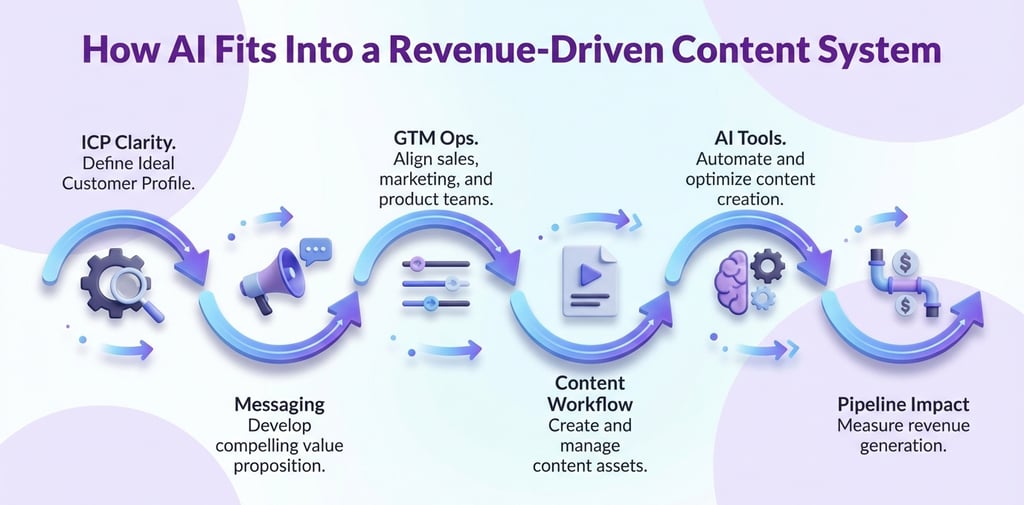
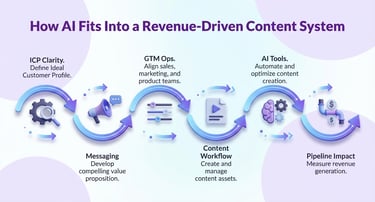
How AI Fits Into a Revenue-Driven Content System
Here’s the truth:
AI doesn’t fix a broken strategy. It amplifies whatever system you already have, good or bad.
Teams don’t fail because they lack tools.
They fail because they lack predictable, repeatable content operations tied to revenue.
That’s exactly what Forsify builds:
➡️ clearer messaging
➡️ scalable repurposing workflows
➡️ GTM operations that turn AI output into pipeline
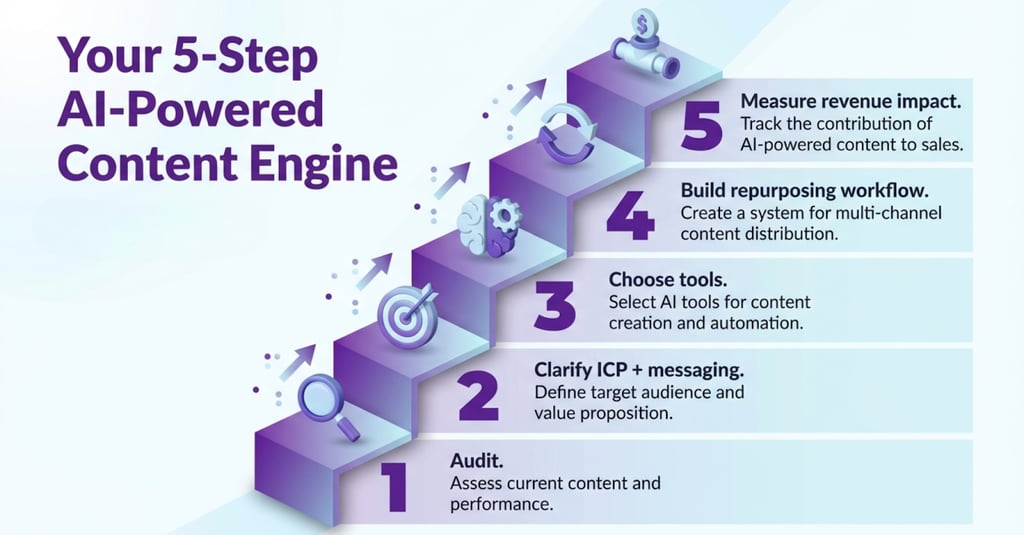
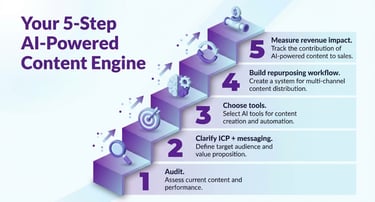
Your 5-Step Plan to Build an AI-Powered Content Engine
1. Audit your current content system
Find gaps in ICP clarity, workflow, and output quality.
2. Clarify messaging, ICP, and offers
AI only works when inputs are crystal clear.
3. Pick tools that address real bottlenecks
Not the shiny tools, the ones that move revenue.
4. Build a repurposing system for every asset
One long-form asset → 10–20 derivative pieces.
5. Measure content by revenue, not vanity metrics
Views don’t scale pipeline, alignment does.
AI isn’t here to replace marketers.
It’s here to remove repetitive production work so marketers can focus on strategy, creativity, and revenue impact.
Teams that adopt AI early, and correctly, will produce higher-quality content, faster, with more predictable pipeline growth.
Frequently asked questions
1. What exactly does Forsify do?
Forsify operates as an AI-powered marketing department that designs, builds, and runs growth systems end to end.
We engineer:
Market positioning and messaging
Authority and demand creation
Outbound, inbound, and nurturing systems
Continuous experimentation and optimization
Our goal is not “more leads” it’s predictable, scalable growth.
2. How is this different from a marketing agency?
Agencies execute tasks. Forsify creates and runs growth engines.
With Forsify, you get:
Growth architecture, not isolated campaigns
AI-driven execution across content, outreach, and nurturing
Continuous testing, iteration, and learning
One integrated system instead of disconnected tools and vendors
We function like a senior in-house marketing team, without the overhead.
3. What problems does Forsify solve?
Forsify solves structural growth problems, including:
Inconsistent demand and revenue volatility
High CAC from paid channels alone
Fragmented marketing tools and teams
Lack of ownership over growth strategy and execution
We replace guesswork with a repeatable, data-driven growth engine.
4. Who is this best suited for?
Forsify works best for:
B2B companies and startups with complex sales cycles
Teams selling high-ACV products or services
Founders who need growth without building a large internal team
If growth is strategic to your business, not an experiment, this is a fit.
5. What does the AI Marketing Department include?
Depending on your configuration, it may include:
Positioning, ICP, and messaging engineering
Authority-building content and thought leadership
Automated outbound and demand capture
Lead nurturing and conversion systems
Analytics, reporting, and optimization loops
All components are designed to work together as one system.
6. How long does it take to see results?
Growth is engineered in phases:
Setup Sprint:
Strategy, infrastructure, ICP, workflows, content, and channel warm-upExecution Phase:
The system goes live, compounds over time, and improves through testing
Meaningful traction typically appears within 20–40 days, with compounding results over time.
7. Is Forsify replacing our internal marketing team?
Not necessarily.
Forsify can:
Act as your entire marketing department, or
Work alongside internal teams to design and run growth engines
We integrate into your existing structure rather than compete with it.
8. How much involvement is required from our team?
Minimal executive involvement.
You’ll be involved in:
Strategic alignment and approvals
Monthly reviews and optimization decisions
Day-to-day execution is handled by Forsify and AI-powered systems
9. Do you only focus on outbound and pipelines?
No.
Pipeline creation is one outcome, not the product.
Forsify focuses on:
Demand creation
Brand authority
Conversion optimization
Long-term growth infrastructure
Pipelines improve because the system works, not because we push volume.
10. How do you measure success?
Success is measured by:
Growth in qualified demand
Conversion rates across the funnel
Cost efficiency versus internal teams
Strategic impact on revenue
KPIs are defined upfront based on your business model.
Forsify
Transform Your Business with AI.
149 New Montgomery st., San Francisco, CA
info@forsify.com
© 2026. All rights reserved.