
Top AI Sales Trends for 2026: How B2B Teams Build Predictable Revenue
Discover the top AI sales trends for 2026 and how B2B teams use AI-driven sales systems to automate prospecting, improve pipeline predictability, and increase revenue ROI.
2/17/20263 min read
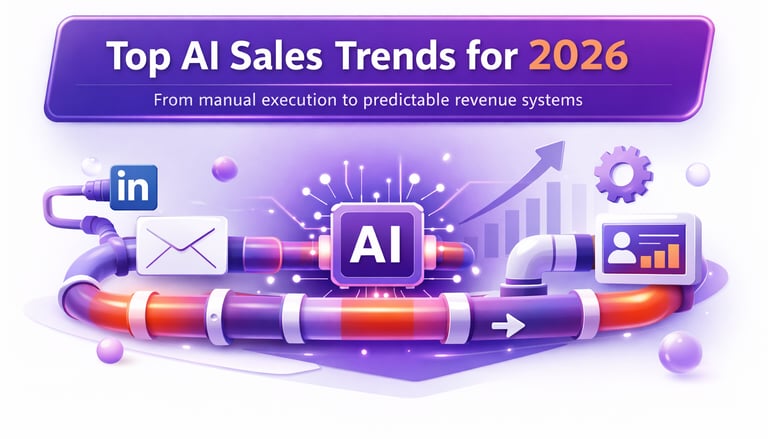
The top AI sales trend for 2026 is the shift from manual sales execution to AI-driven sales systems that create a predictable pipeline and revenue.
In short, B2B sales teams are using artificial intelligence to automate prospecting, personalization, and follow-ups so revenue becomes consistent instead of random.
That’s the real change happening in AI sales in 2026.
AI isn’t replacing sales teams.
It’s replacing inefficiency and guesswork.
And that’s why AI-powered sales systems are now a priority for B2B SaaS and tech companies.
The Short Answer (Up Front)
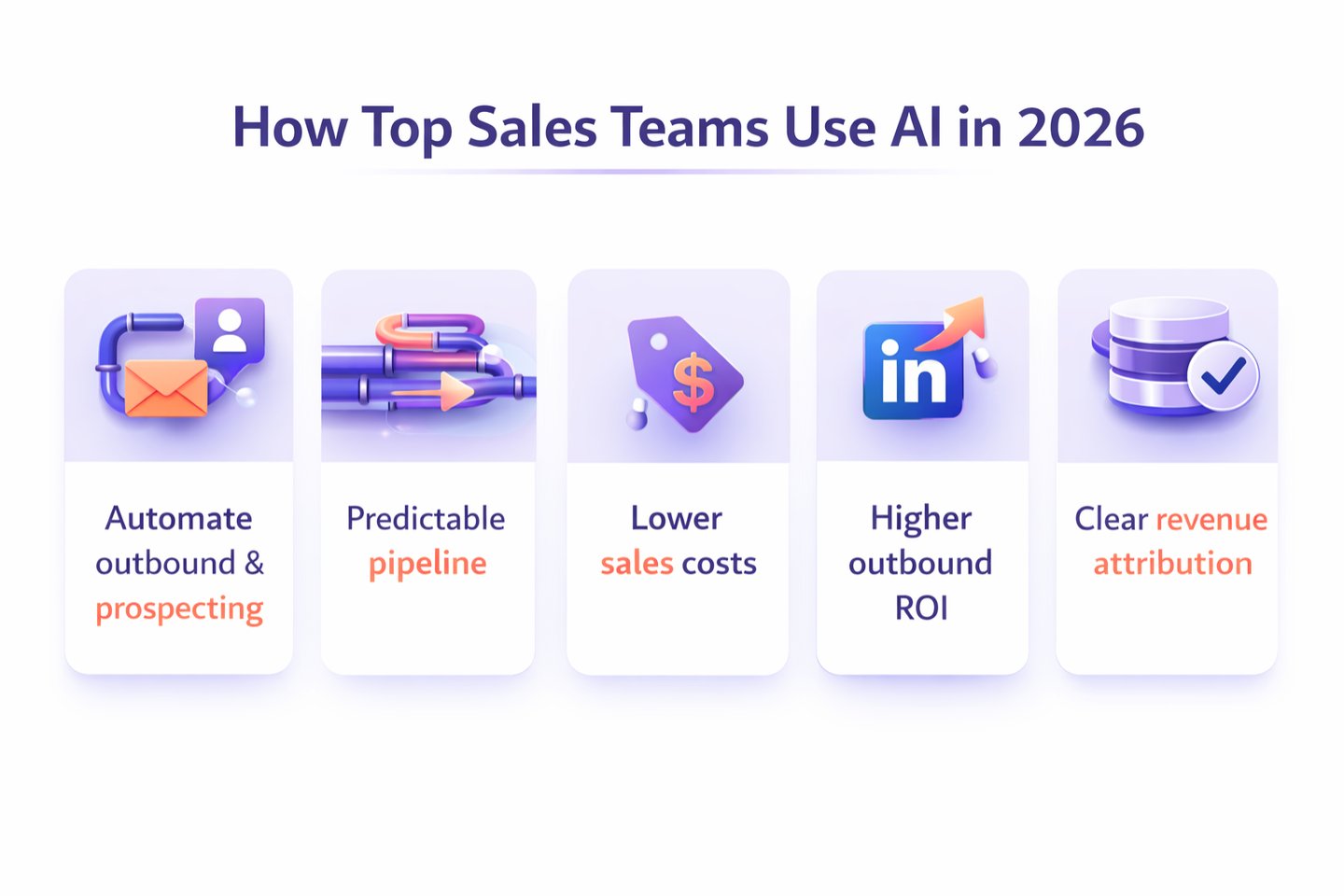
In 2026, high-performing sales teams are using AI for sales to:
Automate outbound sales and prospecting
Improve pipeline predictability
Reduce sales team costs
Increase ROI from outbound and LinkedIn sales
Track revenue attribution clearly
This shift toward AI sales automation is driven by buyer fatigue, rising CAC, and increased pressure on revenue leaders to prove ROI.
Why AI Sales Trends Matter in 2026
The B2B sales landscape has changed fast.
Decision-makers receive hundreds of cold emails and LinkedIn messages weekly
Traditional SDR models are expensive and slow to scale
Outbound sales response rates have declined across industries
As a result, companies are moving away from manual sales tactics and toward AI-driven revenue systems that combine outbound, authority, and nurturing.
This is why AI sales trends for B2B are no longer theoretical—they’re operational.
The Core Problem AI Is Solving in Modern Sales
The biggest issue in B2B sales is not closing deals.
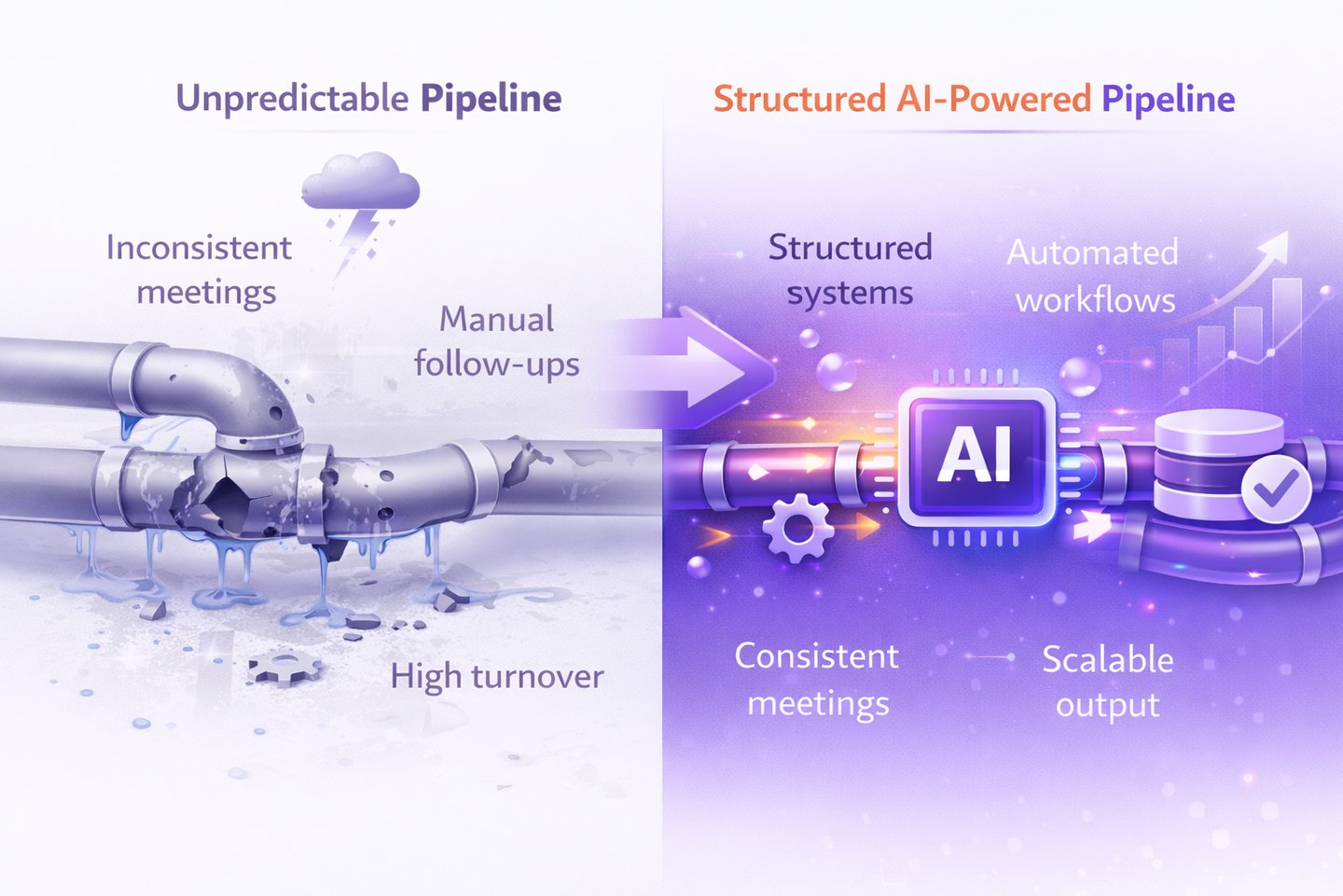
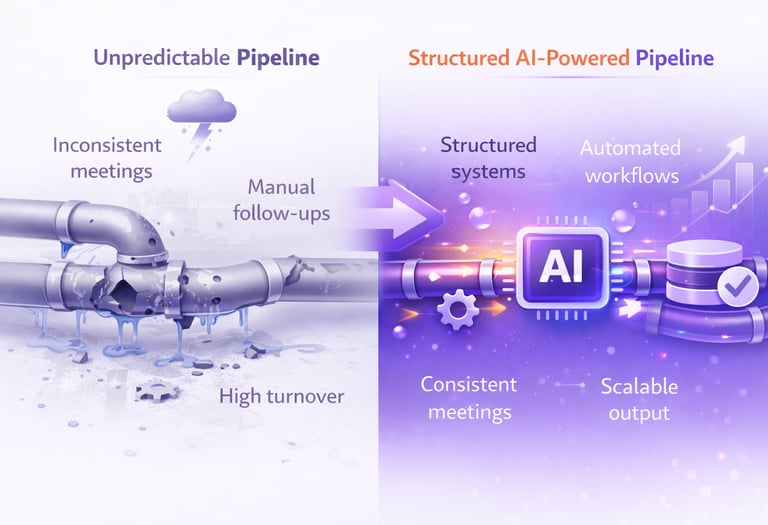
It’s an unpredictable pipeline.
Sales leaders struggle with:
Inconsistent monthly meetings
High SDR turnover
Poor outbound sales performance
Manual follow-ups that don’t scale
AI sales tools and systems solve this by creating structure, consistency, and optimization at scale.
AI Sales Trend #1: AI Replaces Manual Prospecting
One of the biggest AI sales automation trends in 2026 is the removal of manual prospecting.
AI now handles:
Account research
ICP targeting
Lead enrichment
Initial personalization
Follow-up logic
Sales reps focus on discovery and closing.
This shift improves:
Sales productivity
Cost per meeting
Sales team efficiency
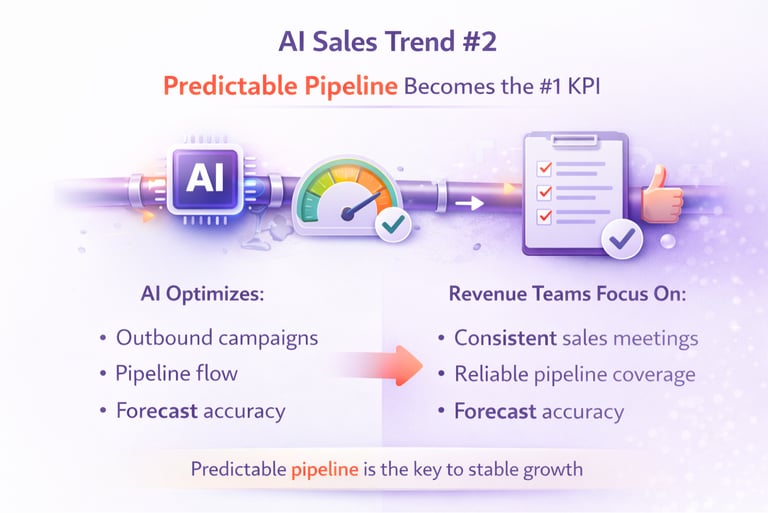
AI Sales Trend #2: Predictable Pipeline Becomes the #1 KPI
In 2026, pipeline predictability matters more than lead volume.
Revenue teams prioritize:
Consistent sales meetings
Reliable pipeline coverage
Forecast accuracy
AI sales platforms optimize outbound campaigns in real time, improving response rates and stabilizing pipeline flow.
This is why AI revenue forecasting and AI pipeline management are growing priorities.
AI Sales Trend #3: Personalized Sales Outreach at Scale
Generic outreach no longer works.
Modern AI-powered sales outreach focuses on:
Role-based messaging
Industry-specific pain points
Buying-intent signals
Studies show personalized outbound sales messages can drive 30–50% higher response rates when relevance is real.
AI enables this personalization without increasing headcount.
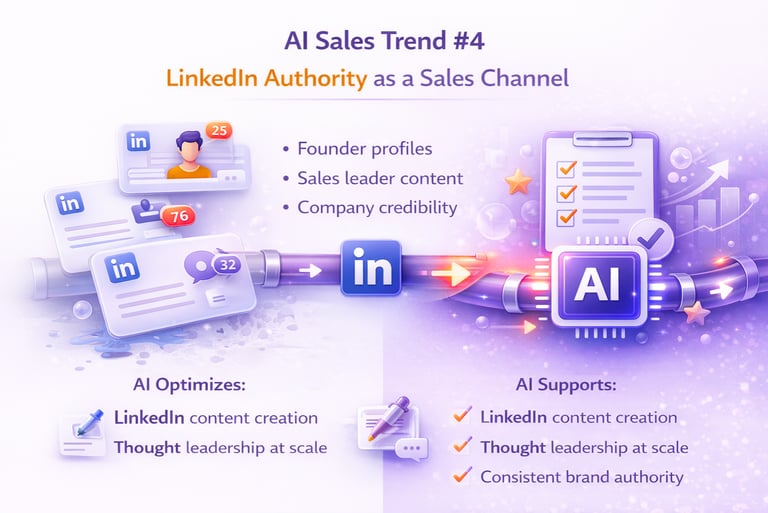
AI Sales Trend #4: LinkedIn Authority as a Sales Channel
In 2026, LinkedIn sales strategy is part of the revenue engine.
Buyers review:
Founder profiles
Sales leader content
Company credibility
AI supports:
LinkedIn content creation
Thought leadership at scale
Consistent brand authority
This improves trust before outbound even starts.
AI Sales Trend #5: Multi-Channel AI Sales Systems
Single-channel sales is no longer effective.
Top teams use AI sales systems that combine:
Email outreach
LinkedIn sales
Content distribution
Automated nurturing
Multi-channel AI sales strategies outperform email-only or LinkedIn-only approaches, especially in B2B SaaS sales.
AI Sales Trend #6: Automated Sales Nurturing
Most prospects are not ready to buy immediately.
AI sales nurturing systems:
Follow up automatically
Adapt messaging over time
Re-activate cold leads
Companies using AI-driven lead nurturing often see 20–40% more pipeline from existing leads.
AI Sales Trend #7: Smaller Sales Teams, Higher Output
AI enables leaner sales teams.
Instead of hiring more SDRs, companies invest in:
AI sales automation
Revenue operations systems
Predictable outbound engines
This lowers CAC and improves ROI.
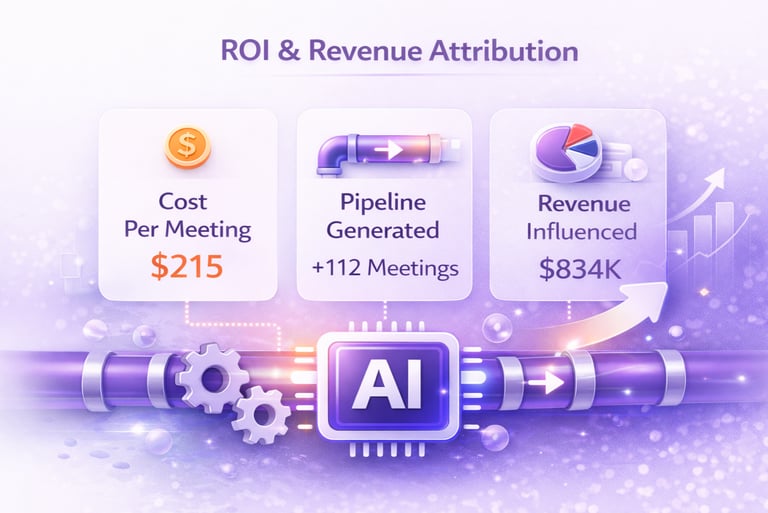
AI Sales Trend #8: ROI Transparency and Revenue Attribution
In 2026, sales leaders must show results.
AI sales platforms track:
Cost per meeting
Pipeline contribution
Revenue attribution
This shift makes AI sales ROI measurable and board-ready.
What These AI Sales Trends Mean for Revenue Leaders
Winning sales teams in 2026:
Build AI-first sales systems
Focus on predictable revenue
Replace hustle with structure
Sales is becoming a discipline of systems, not heroics.
AI didn’t replace sales in 2026.
It replaced randomness.
The companies winning with AI sales strategies are calm, predictable, and efficient.
Less chaos.
More control.
Better revenue outcomes.
Frequently asked questions
1. What exactly does Forsify do?
Forsify operates as an AI-powered marketing department that designs, builds, and runs growth systems end to end.
We engineer:
Market positioning and messaging
Authority and demand creation
Outbound, inbound, and nurturing systems
Continuous experimentation and optimization
Our goal is not “more leads” it’s predictable, scalable growth.
2. How is this different from a marketing agency?
Agencies execute tasks. Forsify creates and runs growth engines.
With Forsify, you get:
Growth architecture, not isolated campaigns
AI-driven execution across content, outreach, and nurturing
Continuous testing, iteration, and learning
One integrated system instead of disconnected tools and vendors
We function like a senior in-house marketing team, without the overhead.
3. What problems does Forsify solve?
Forsify solves structural growth problems, including:
Inconsistent demand and revenue volatility
High CAC from paid channels alone
Fragmented marketing tools and teams
Lack of ownership over growth strategy and execution
We replace guesswork with a repeatable, data-driven growth engine.
4. Who is this best suited for?
Forsify works best for:
B2B companies and startups with complex sales cycles
Teams selling high-ACV products or services
Founders who need growth without building a large internal team
If growth is strategic to your business, not an experiment, this is a fit.
5. What does the AI Marketing Department include?
Depending on your configuration, it may include:
Positioning, ICP, and messaging engineering
Authority-building content and thought leadership
Automated outbound and demand capture
Lead nurturing and conversion systems
Analytics, reporting, and optimization loops
All components are designed to work together as one system.
6. How long does it take to see results?
Growth is engineered in phases:
Setup Sprint:
Strategy, infrastructure, ICP, workflows, content, and channel warm-upExecution Phase:
The system goes live, compounds over time, and improves through testing
Meaningful traction typically appears within 20–40 days, with compounding results over time.
7. Is Forsify replacing our internal marketing team?
Not necessarily.
Forsify can:
Act as your entire marketing department, or
Work alongside internal teams to design and run growth engines
We integrate into your existing structure rather than compete with it.
8. How much involvement is required from our team?
Minimal executive involvement.
You’ll be involved in:
Strategic alignment and approvals
Monthly reviews and optimization decisions
Day-to-day execution is handled by Forsify and AI-powered systems
9. Do you only focus on outbound and pipelines?
No.
Pipeline creation is one outcome, not the product.
Forsify focuses on:
Demand creation
Brand authority
Conversion optimization
Long-term growth infrastructure
Pipelines improve because the system works, not because we push volume.
10. How do you measure success?
Success is measured by:
Growth in qualified demand
Conversion rates across the funnel
Cost efficiency versus internal teams
Strategic impact on revenue
KPIs are defined upfront based on your business model.
Forsify
Transform Your Business with AI.
149 New Montgomery st., San Francisco, CA
info@forsify.com
© 2026. All rights reserved.